What's the real difference between Light Summer and Soft Autumn?
Undertone. Light Summer is cool, built around shades like soft rose, powder blue and lavender, while Soft Autumn is warm, built around soft terracotta, moss green and camel. Depth differs too, Light Summer sitting at low contrast against Soft Autumn at low, but temperature is what you should test first. A palette on the wrong side of that line leaves skin looking sallow or grey however well the depth matches.
Are Light Summer and Soft Autumn the same season?
No. Light Summer belongs to Summer and Soft Autumn belongs to Autumn, two separate seasons in the twelve-type system. They also sit on opposite sides of the warm and cool line, which makes confusing them the more costly kind of mistake. The shades each one is named for do not transfer between them.
Which key colors define Light Summer vs Soft Autumn?
Light Summer is defined by soft rose, powder blue, lavender and pale aqua. Light Summer colors are cool, light, and slightly softened. They flatter by staying close to your own gentle contrast rather than fighting it. Soft Autumn is defined by soft terracotta, moss green, camel and dusty rosewood. Soft Autumn colors are warm but softened, as though a little grey has been stirred into every shade. Nothing in your palette is fully saturated. Metals are the quickest tell of all: Light Summer wants silver or white gold, and Soft Autumn wants gold or rose gold.
Am I Light Summer or Soft Autumn? How can I tell the difference?
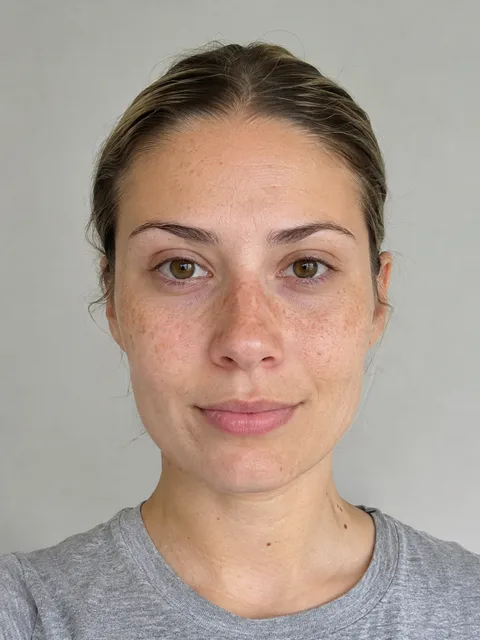
Temperature first: hold soft rose and soft terracotta fabric under your chin in daylight and watch which one evens out your skin instead of adding shadow. Then clarity, since both types sit at low contrast: compare a clear soft rose against a more blended shade and see which one your face wears comfortably. Then metals: Light Summer suits silver or white gold and Soft Autumn suits gold or rose gold. When two of the three agree, that is your answer.
Who are some celebrity examples of Light Summer and Soft Autumn?
For Light Summer, look at Reese Witherspoon, Taylor Swift, Gwyneth Paltrow and Kristen Bell. For Soft Autumn, look at Drew Barrymore, Gisele Bündchen, Sienna Miller and Cindy Crawford. Read them for the relationship between hair, skin and eyes rather than for individual outfits, since a stylist can put anyone in anything. Daylight photographs without heavy makeup or filters are far more useful here than red-carpet shots.
Why does getting Light Summer vs Soft Autumn right matter?
Because the two palettes fail in opposite directions, and the failure is quiet rather than obvious. Wearing Soft Autumn colors as a Light Summer lays a warm cast over cool skin, which shows up as dullness, grey under the eyes, or a yellow flatness people read as tiredness rather than as a wardrobe problem. It also costs money. Most of a wardrobe is neutrals and basics, and buying those on the wrong side of the line means every top you own works slightly against your face while none of them looks obviously wrong on the hanger. Metals compound it: Light Summer suits silver or white gold and Soft Autumn suits gold or rose gold, so jewelry bought for the wrong season quietly undercuts the rest.
Can Light Summer and Soft Autumn share any colors?
Not the same shades, but a large share of both palettes sits close enough that one garment could pass for either. Those near-matches are the softest, most neutral parts of each palette, where the gap narrows to a degree or two of warmth. Everything either season is known for stays on its own side: soft rose and powder blue for Light Summer, soft terracotta and moss green for Soft Autumn. Treat the near-matches as safe ground, not as proof the palettes are interchangeable.
What's the fastest way to confirm my season at home?
Stand at a window in indirect daylight, without makeup, in something that will not bounce color onto your face. Hold soft rose against soft terracotta under your chin, one at a time, and watch your skin rather than the fabric: the right one evens out redness and softens the shadows under your eyes, and the wrong one adds a grey or yellow cast. Then repeat at your wrist with silver or white gold against gold or rose gold jewelry. Two signals pointing the same way is usually enough, and a photo-based analysis will confirm it in minutes.