Free body shape calculator

What Is My Body Shape? Find out in a minute

Grab a soft tape measure and enter three numbers. You get your shape, the two ratios that decided it, and a full guide to the cuts that work for you.

  • No sign-up
  • cm or inches
  • A guide for every shape

Your measurements

Around the fullest part, tape level across your back.

cm

The narrowest point, usually just above the navel.

cm

The widest point around your hips and seat.

cm

Your numbers stay in your browser. Nothing is saved or sent.

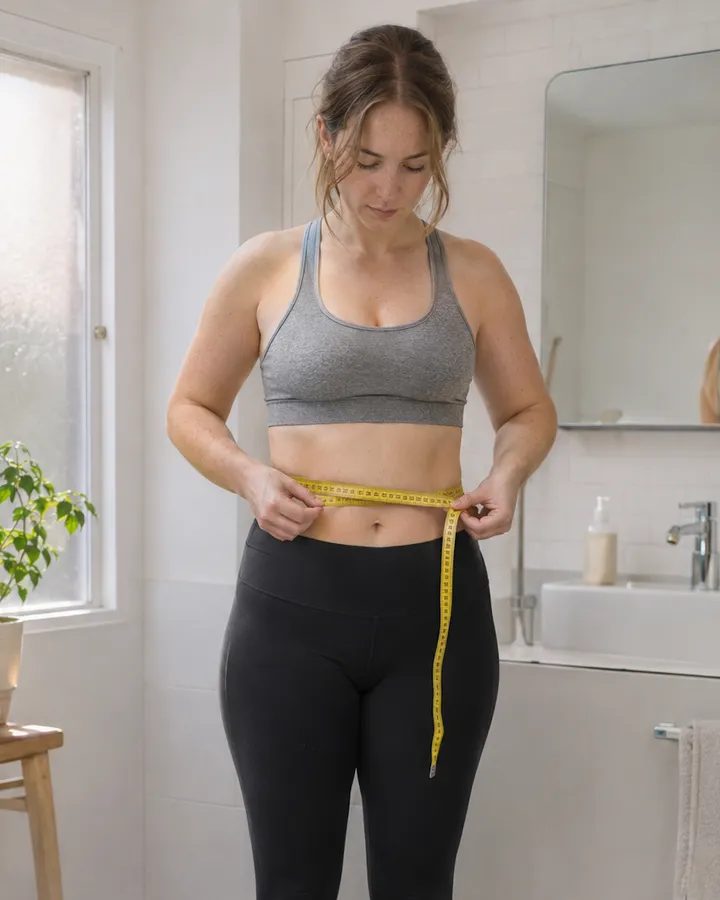
Woman in a sports bra and leggings measuring her natural waist with a yellow tape measure

How to measure yourself

Three minutes, a soft tape and a mirror. Accurate numbers matter more than anything else here: a centimeter or two can move you between two shapes.

  1. 1

    Measure your bust

    Wear a thin, non-padded bra. Wrap the tape around the fullest part of your chest and keep it level across your back, close but not pressing in.

  2. 2

    Measure your waist

    Find the narrowest point of your torso, usually an inch or two above your belly button. Breathe out normally and measure there without sucking in.

  3. 3

    Measure your hips

    Stand with your feet together and measure around the widest part of your hips and seat. Check the mirror sideways to make sure the tape is level.

For numbers you can trust

  • Measure over underwear or a thin layer, never over jeans or a sweater.
  • Use a soft fabric tape, not a metal one.
  • Stand relaxed in front of a mirror so you can see the tape is level.
  • Take each measurement twice. If they differ, use the average.

How the calculator decides

No black box. Your result comes from two comparisons, and the result card shows you both.

Balance
Bust and hips within 5% of each other count as balanced. Hips wider than that point to a pear, a wider bust to an inverted triangle.
Waist
A waist at 75% of your bust or hips or less is clearly defined (hourglass if you are balanced). Above that and balanced, you are a rectangle.
Midsection
If your waist reaches 90% of your widest measurement, your midsection defines the silhouette and the result is apple, whatever your balance.

Measurements describe proportion, not size. Two people in very different sizes can share a shape, and the styling advice works the same for both.

Example measurements and their body shape

Real numbers make the rules easier to see. Every row below went through the calculator above. Find the row nearest to yours and see why it lands where it does.

Sample bust, waist and hip measurements with the body shape each one gives
Bust Waist Hips Shape Why
36 in (91 cm) 24 in (61 cm) 36 in (91 cm) Hourglass Bust and hips match, waist at 67% of the widest point.
35 in (89 cm) 27 in (69 cm) 36 in (91 cm) Hourglass close to Rectangle Bust and hips 3% apart, waist at 75% of the widest point.
32 in (81 cm) 25 in (64 cm) 33 in (84 cm) Rectangle close to Hourglass Bust and hips 3% apart, waist at 76% of the widest point.
33 in (84 cm) 28 in (71 cm) 34 in (86 cm) Rectangle Bust and hips 3% apart, waist at 82% of the widest point.
34 in (86 cm) 27 in (69 cm) 39 in (99 cm) Pear Hips 13% wider than bust, waist at 69% of the widest point.
35 in (89 cm) 28 in (71 cm) 38 in (97 cm) Pear Hips 8% wider than bust, waist at 74% of the widest point.
39 in (99 cm) 30 in (76 cm) 35 in (89 cm) Inverted Triangle Bust 11% wider than hips, waist at 77% of the widest point.
38 in (97 cm) 36 in (91 cm) 38 in (97 cm) Apple Bust and hips match, waist at 95% of the widest point.

Sample figures, not targets. Shape is about proportion, so a bigger or smaller body with the same ratios gets the same result.

Shoulder and high hip: the tie-breakers

Three measurements are enough for a result. Two more help when that result sits right between two shapes.

Shoulders

Measure around the outside of both shoulders at their widest, arms relaxed. Shoulders clearly wider than your hips push you toward inverted triangle styling even when your bust and hips are close. Narrow, sloping shoulders push you toward pear styling.

High hip

Measure about 10 cm (4 in) below your waist, around the top of the hip bones. A high hip close to your full hip gives a straighter, squarer lower half; a much smaller one means your curve sits lower, around the seat and thighs.

When to use them

Only when your result says you are close to a second shape. The calculator itself uses bust, waist and hips. If shoulders or high hip lean one way, read that guide first.

Waist-to-hip ratio, in plain terms

A one-line sum people often mistake for body shape. It is one piece of it.

How to work it out
Divide your waist by your hips, in the same unit. A 28 inch waist and 38 inch hips gives 0.74. The smaller the number, the bigger the step in from hips to waist. A number near 1 means they are almost the same width.
What it shows
How defined your waist is compared with your hips. That is the one comparison that separates an hourglass from a rectangle, and the result card on this page shows it for you.
What it does not show
It ignores your bust and shoulders, so on its own it cannot tell a pear from an inverted triangle. It is a styling measurement here, not a health verdict. If you have questions about your health, talk to a doctor.

How to dress your body shape

The short version for each shape. Starting points, not rules: keep what feels like you.

Hourglass silhouette

Hourglass

Keep the balance you already have and show where your waist is. Anything that hides your waist makes you look wider than you are.

Hourglass styling guide
Pear silhouette

Pear

Bring the eye up and widen the line of your shoulders, so they match your hips. Your waist is usually your best feature: mark it.

Pear styling guide
Apple silhouette

Apple

Build a long vertical line through the middle of your body and point the eye toward your face, your neckline and your legs.

Apple styling guide
Rectangle silhouette

Rectangle

Choose between two looks: lean into the clean lines that straight figures wear best, or add curves with shape at the bust and hip and definition at the waist.

Rectangle styling guide
Inverted Triangle silhouette

Inverted Triangle

Soften and simplify the top half and build width and interest in the lower half, so your hips match your shoulders.

Inverted Triangle styling guide

Body shape, body type or color season?

Three terms that get mixed up online. They answer different questions.

Body shape

Your outline: how bust, waist and hips compare. It decides which cuts and silhouettes balance you. This is what the calculator measures.

Body type

Usually means build (slender, muscular, soft), sometimes the old ectomorph, mesomorph and endomorph groups. Useful in a gym, much less useful in a fitting room.

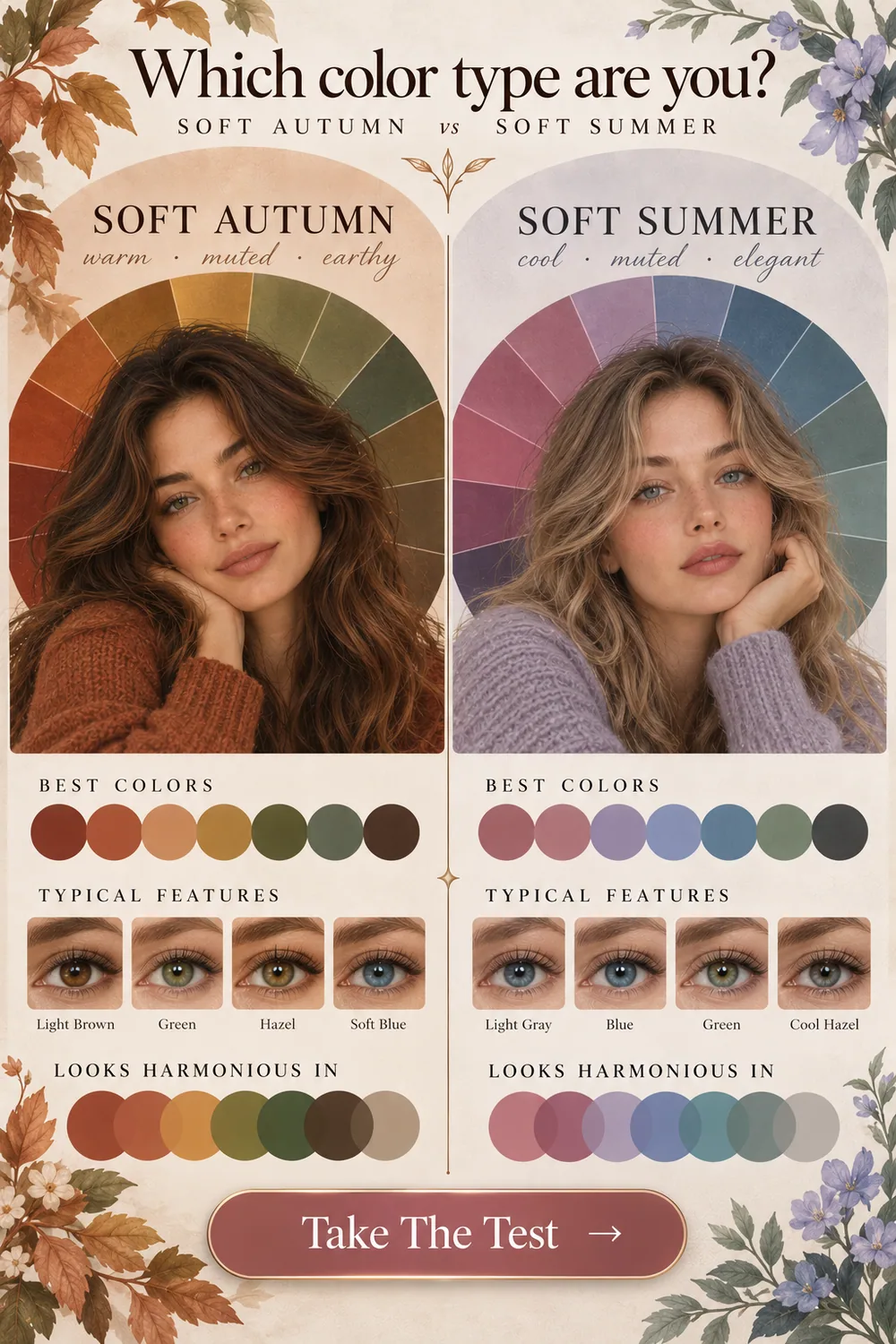
Color season

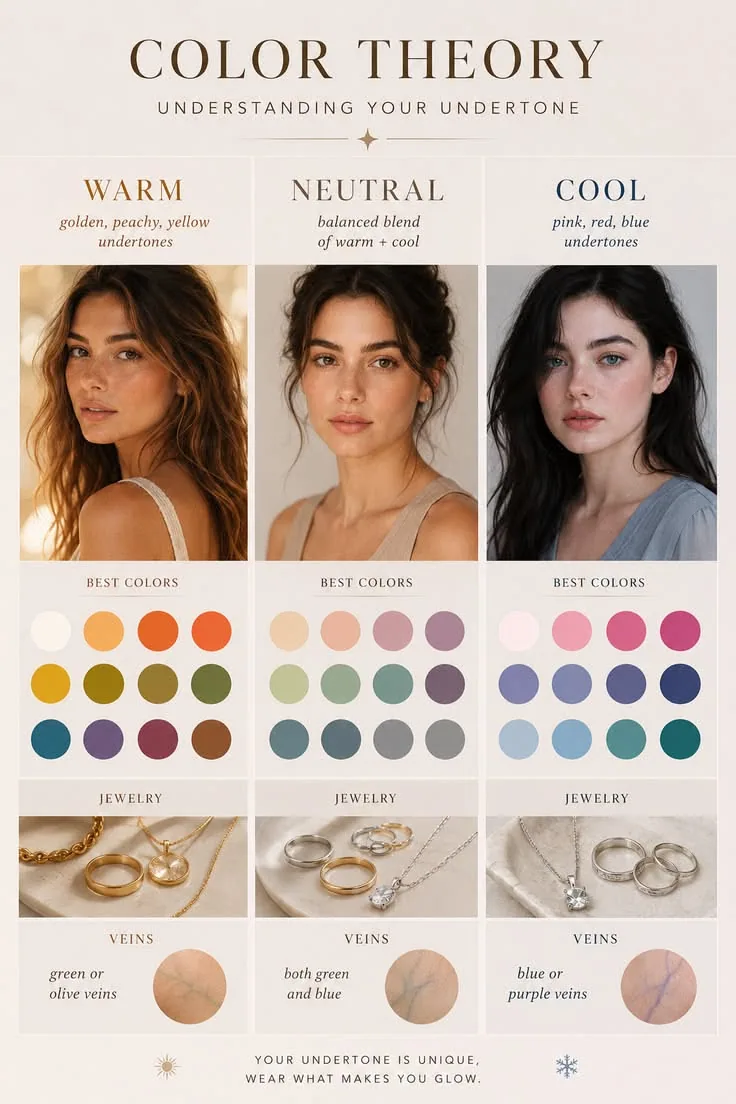
Your coloring: undertone, depth and contrast across skin, hair and eyes. It decides which shades make you look rested. Shape picks the cut, season picks the color.

See the 12 color seasons

The other half of the picture

Body shape picks the cut. Your colors pick the shade.

You can buy the most flattering wrap dress for your shape and still look washed out in it. Fit controls the line of your body. Color controls what happens to your skin, eyes and hair, and that is the first thing anyone sees.

Your color season tells you which shades make you look clear and rested. Once you know it, every guide on this site tells you where to put them: brighter colors where you want attention, deeper ones where you want the line to recede.

Woman comparing the same wrap dress in emerald green and mustard yellow, holding the green one against herself

Frequently Asked Questions

How do I calculate my body shape?
Measure your bust, waist and hips with a soft tape and compare them. If your bust and hips are within 5% of each other and your waist is 75% of them or less, you are an hourglass; with a straighter waist you are a rectangle. Hips clearly wider than your bust make you a pear, a wider bust an inverted triangle, and a waist close to your widest measurement an apple. The calculator on this page does the math for you.
What are the five body shapes?
The five shapes most stylists use are hourglass (balanced with a defined waist), pear (hips wider than bust), apple (fullest at the midsection), rectangle (straight, with little waist definition) and inverted triangle (shoulders and bust wider than hips).
What is the most common body shape?
Rectangle and pear are usually found to be the most common female body shapes in measurement studies. A dramatic hourglass is much rarer than fashion imagery suggests.
Is body shape the same as body type?
People use the terms interchangeably. Strictly, body shape describes the proportions between your bust, waist and hips, which is what this calculator measures. Body type is sometimes used for overall build, such as slender or muscular, which says little about how clothes will fit.
Can I be between two body shapes?
Yes, and many people are. If a measurement sits near a cut-off the calculator tells you which shape you are close to. Read both guides and keep the advice that matches how clothes actually fit you.
Does my body shape change if I gain or lose weight?
Your frame, meaning the width of your shoulders and hips, stays the same, so most people keep the same basic shape. Weight changes can move you between neighboring shapes for a while, for example from hourglass toward rectangle or apple.
What is a 36-24-36 figure?
It means a 36 inch bust, 24 inch waist and 36 inch hips (about 91, 61 and 91 cm). Bust and hips are equal and the waist is two thirds of them, which is the textbook hourglass. Very few people measure exactly like that, and you do not need to for hourglass advice to work.
Does body shape change with age?
Your frame does not, but where you carry weight often does. Many people find their waist becomes less defined over time, which can move an hourglass toward rectangle or a rectangle toward apple. Measure again every few years and dress for the shape you have now.
Can you change your body shape?
Only partly. Exercise and weight change can alter your waist and how full your hips or bust are, but the width of your shoulders and hip bones is set by your skeleton. Clothes are the fastest way to change how your shape reads.
Does my body shape decide which colors suit me?
No. Colors depend on your coloring (skin undertone, hair and eyes), not your proportions. Two pears can belong to completely different color seasons. Shape tells you where to place a bright or deep shade; your season tells you which shades to choose.
Is the calculator accurate for men?
The five shapes and the advice on these pages are written for women's clothing. The measurement logic works for anyone, but menswear uses chest, waist and shoulder rather than bust and hip.
What matters more for looking good, body shape or color?
They do different jobs. Body shape decides which cuts give you a balanced line. Color decides whether your skin looks clear and rested or tired and sallow. A perfectly cut dress in a color that fights your undertone still looks off, which is why we pair both.

Keep going

More free guides

All guides

Your shape is sorted. Let's find your colors

One selfie is enough. The AI reads your undertone, depth and contrast and returns your color season with a palette of 30+ shades you can shop your new cuts in.

Get my color analysis