
Free · 1 minute · No sign-up

What Hair Color Suits Me? Find your shade.

The shade that suits you follows your undertone, depth and contrast, not the trend of the month. Answer six quick questions and get your shades ranked for what you want, the ones to skip, and a brief to hand your colorist.
  • 30 salon shades
  • All 12 color seasons
  • Copyable salon brief
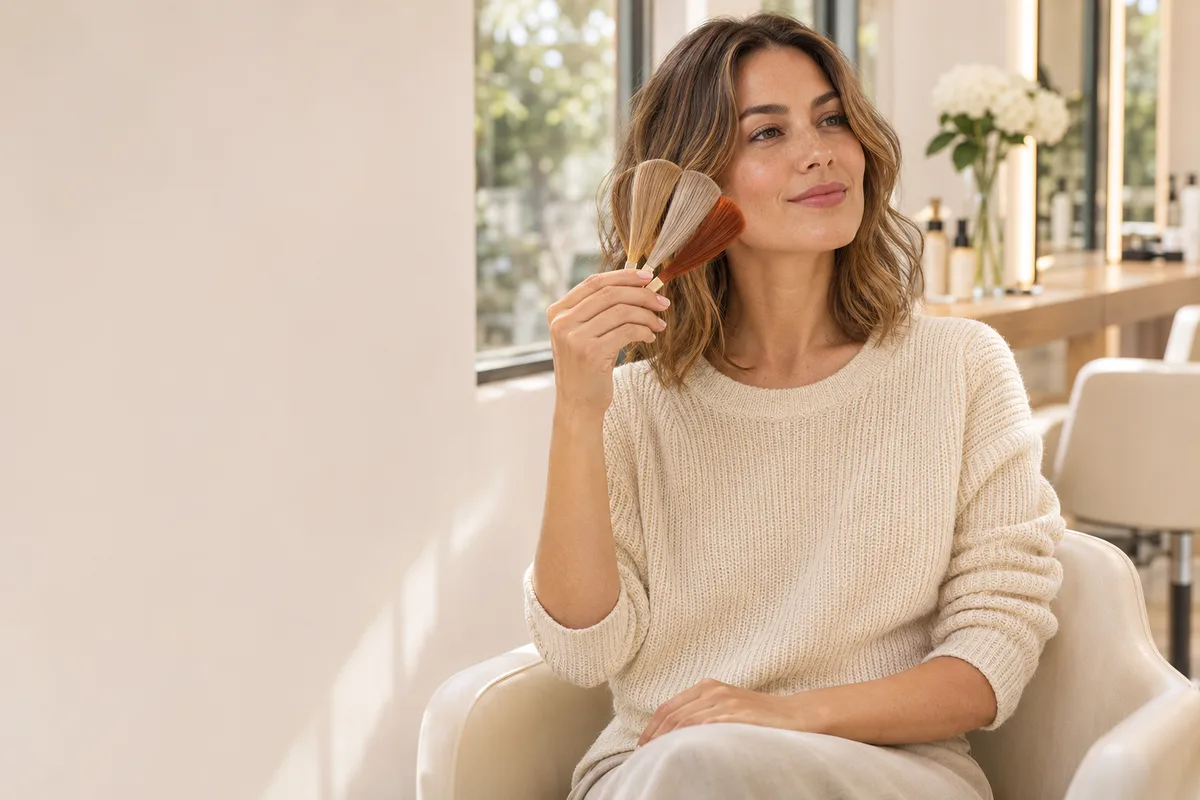
Woman in a bright salon holding honey blonde, ash blonde and copper hair swatches beside her cheek to compare them
Honey, ash or copper? The right one makes your eyes look clearer.

30 salon shades · 12 seasons

LightestDarkest

Hair color finder · 6 questions · 1 minute

Find the hair colors made for your coloring

  • Your season, read from undertone, depth and contrast
  • Shades ranked for what you want: lighter, darker, refreshed or bold
  • A salon brief with level, tone and upkeep to show your colorist

Free and private: no sign-up, and your answers never leave your browser.

What decides your shade

Same woman, same light. Only the tone changed.

Both of these are good blondes. On her, the honey version makes her skin look rested and her eyes brighter; the ash version pulls a grey cast into her face. That is undertone at work, and it is the first of three things the finder reads.
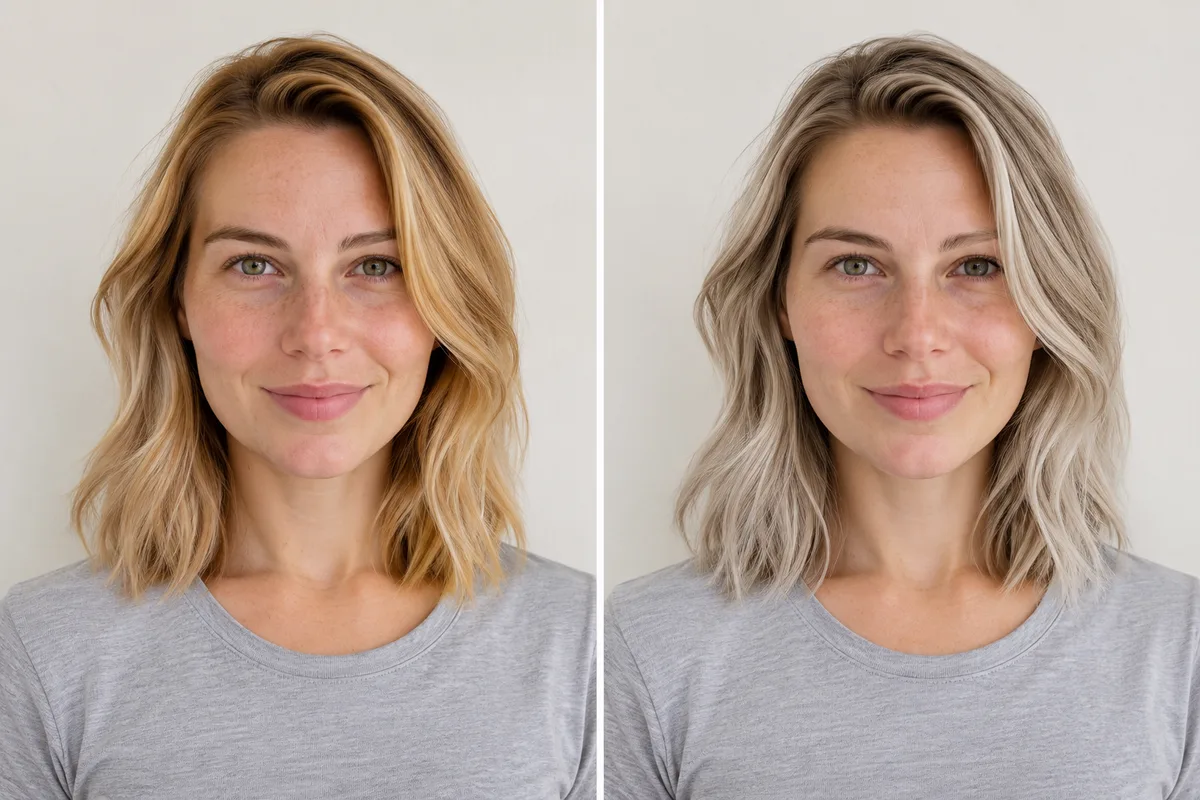
The same woman photographed twice, once with warm honey blonde hair and once with cool ash blonde hair
Honey blonde · warm Ash blonde · cool
  1. 1

    Undertone sets the tone

    Warm skin glows next to golden, honey and copper. Cool skin looks clearer next to ash, beige and blue-black. Pick the wrong side and the color looks brassy or grey within a week, whatever the shade.

  2. 2

    Depth sets the level

    How light or dark your skin, eyes and natural hair are together. Staying within two levels of your natural color always looks believable. Further than that is possible, but plan for more upkeep.

  3. 3

    Contrast sets the drama

    Light skin with dark eyes carries crisp, solid color and near-black. Soft, blended coloring looks best with diffused balayage and a root close to natural.

Speak your colorist's language

Every hair color is a level and a tone

Colorists describe hair with two things: a level from 1 (black) to 10 (lightest blonde), and a tone, the color you see on top of it. "A level 7 golden blonde" means the same thing in every salon. "Something like her hair" does not.

The salon brief in the finder uses these words, so you can read it out as it is.
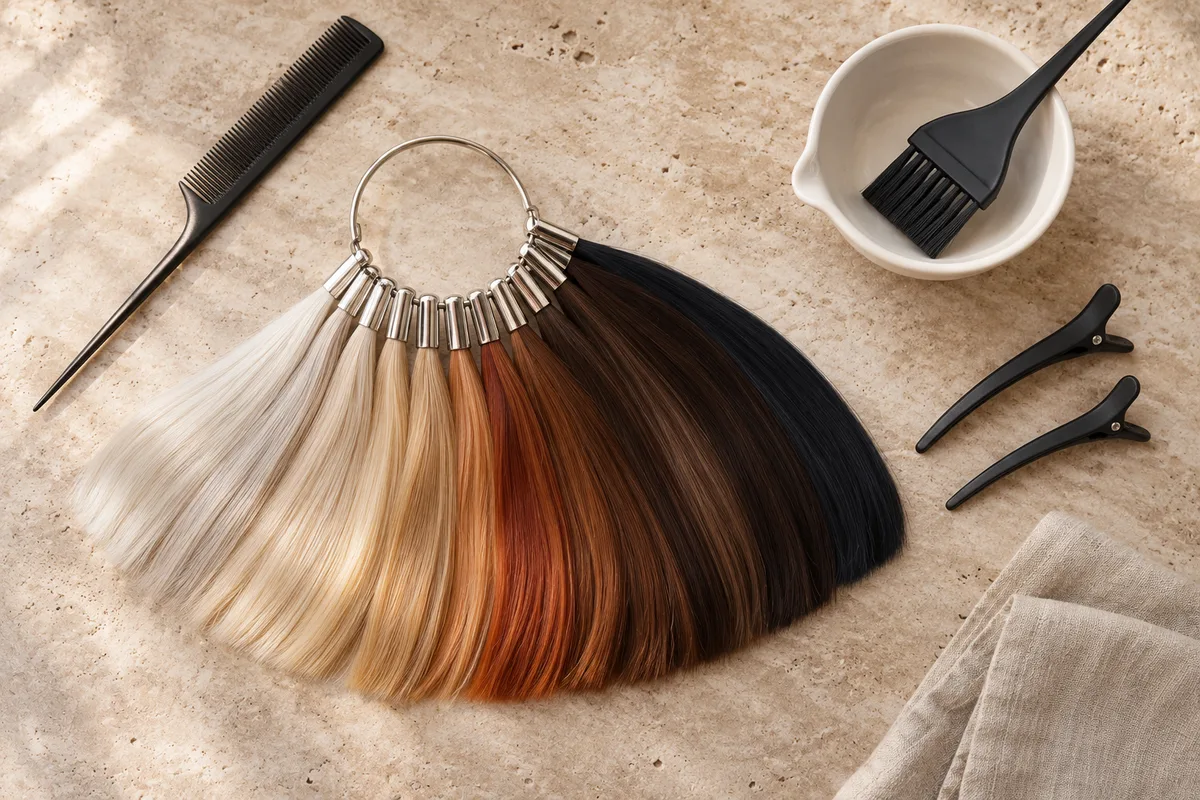
Hair color swatch ring fanned out from platinum blonde to blue-black on stone, with a tail comb, clips and a tint bowl

The ten levels

  1. 10 Lightest blonde
  2. 9 Very light blonde
  3. 8 Light blonde
  4. 7 Medium blonde
  5. 6 Dark blonde
  6. 5 Light brown
  7. 4 Medium brown
  8. 3 Dark brown
  9. 2 Darkest brown
  10. 1 Black

The seven tones, cool to warm

  • Ash cool Green or blue based. Cancels warmth and brass. Reads smoky, can look grey on warm skin.
  • Violet cool Blue-red. Burgundy, black cherry and mahogany. Best on cool, high-contrast coloring.
  • Beige neutral A soft, sandy mix of ash and gold. The safest shade for neutral and soft coloring.
  • Natural neutral Balanced, like most virgin hair. Ask for it when you want depth without a tone.
  • Red neutral True red sits in the middle: tipped orange it warms, tipped violet it cools.
  • Golden warm Yellow based. Adds warmth and shine, flatters golden and peachy skin.
  • Copper warm Orange based. The boldest warm tone. Fades fastest, so it needs a gloss every few weeks.

Hair colors by color season

The best hair colors for all twelve seasons

Already know your season? Here are its shades from light to dark and the ones to skip. Open any season in the finder to rank them for your goal and get the salon brief.

Spring

Light Spring

warm

Light, warm and clear: golden blondes that stay bright and airy.

  • Butter Blonde
  • Champagne Blonde
  • Strawberry Blonde
  • Honey Blonde
  • Golden Bronde

Skip: blue-black, ash brown, mahogany.

Warm Spring

warm

Fully warm and lively: honey, strawberry and bright copper.

  • Strawberry Blonde
  • Copper
  • Honey Blonde
  • Golden Bronde
  • Caramel

Skip: ash blonde, cool espresso, blue-black.

Bright Spring

warm

Warm with high contrast: glossy golden browns and clear copper.

  • Copper
  • Caramel
  • Golden Brown
  • Chestnut
  • Auburn

Skip: mushroom brown, ash blonde, beige blonde.

Summer

Light Summer

cool

Light, cool and soft: pearly, beige and ash blondes.

  • Pearl Blonde
  • Ash Blonde
  • Beige Blonde
  • Rose Gold
  • Mushroom Bronde

Skip: copper, butter blonde, blue-black.

Cool Summer

cool

Fully cool and gentle: ash blondes through cool, mid browns.

  • Ash Blonde
  • Beige Blonde
  • Mushroom Bronde
  • Ash Brown
  • Mushroom Brown

Skip: copper, honey blonde, blue-black.

Soft Summer

cool

Cool-neutral and muted: smoky, blended browns and beige blondes.

  • Beige Blonde
  • Rose Gold
  • Mushroom Bronde
  • Ash Brown
  • Mushroom Brown

Skip: blue-black, copper, platinum ice.

Autumn

Soft Autumn

warm

Warm-neutral and muted: soft golds, caramel and gentle copper.

  • Champagne Blonde
  • Golden Bronde
  • Honey Blonde
  • Caramel
  • Cinnamon

Skip: blue-black, platinum ice, black cherry.

Warm Autumn

warm

Rich and fully warm: copper, auburn and spiced browns.

  • Copper
  • Cinnamon
  • Caramel
  • Auburn
  • Golden Brown

Skip: ash blonde, platinum ice, blue-black.

Deep Autumn

warm

Deep and warm: dark auburn, chestnut and chocolate with golden shine.

  • Chestnut
  • Auburn
  • Golden Brown
  • Dark Auburn
  • Dark Chocolate

Skip: platinum ice, ash blonde, mushroom brown.

Winter

Cool Winter

cool

Fully cool and clear: blue-black, cool espresso and icy blonde.

  • Ash Brown
  • Cool Espresso
  • Black Cherry
  • Blue-Black
  • Soft Black

Skip: honey blonde, copper, caramel.

Deep Winter

cool

Deep and cool-neutral: soft black, espresso and deep cherry.

  • Dark Chocolate
  • Cool Espresso
  • Black Cherry
  • Soft Black
  • Blue-Black

Skip: butter blonde, copper, mushroom bronde.

Bright Winter

cool

Cool and vivid: inky black, black cherry and clean, icy contrast.

  • Mahogany
  • Black Cherry
  • Cool Espresso
  • Blue-Black
  • Soft Black

Skip: caramel, golden bronde, mushroom brown.

Not sure which of these is yours? Start with the skin undertone test (the finder picks up your result), then narrow down with the twelve-season guide .

Before you book

Four checks before the appointment

Do these in daylight with no makeup. Indoor bulbs are yellow and will push every result warm.

  1. Step 1: Start with undertone, not the shade you want

    Warm undertones carry golden, honey, copper and caramel. Cool undertones carry ash, mushroom, cool espresso and true black. Picking a shade on the wrong side of that line is what makes fresh color look brassy or flat within a week.

  2. Step 2: Use the jewelry test as a shortcut

    Gold flattering means warm, so lean into honey, caramel and copper. Silver flattering means cool, so lean into ash, cool brown and blue-black. If both look fine you are neutral and can wear the softer middle of either range.

  3. Step 3: Match the depth to your own contrast

    Going much lighter or darker than your natural level changes how much contrast your face carries. High-contrast coloring can take near-black. Low-contrast coloring usually looks better staying within two shades of natural.

  4. Step 4: Check it against your eyes, not the swatch book

    The right shade makes your eyes look clearer and the skin under them look brighter. The wrong one pulls attention to shadows and redness. Judge in daylight, on your own face, with no makeup.

When fresh color goes wrong

  • It turned brassy

    Warm pigment sits under every lightened brown and blonde. When the cool toner washes out, the gold underneath shows. Cool-toned? Ask for an ash base and refresh the toner, not the whole color.

  • It looks grey and flat

    Too much ash on warm skin. The face looks tired and the hair looks dull. Ask for a golden or beige gloss to bring the warmth back.

  • It looks too harsh

    Usually too dark for your contrast. Every shadow and line reads stronger. Lift one or two levels, or add soft pieces around the face.

  • The red faded in weeks

    Copper and red have the smallest pigment molecules and wash out first. Sulphate-free shampoo, cool water and a gloss every four to six weeks.

Frequently Asked Questions

What hair color suits me best?
The one that matches your undertone and sits close to your natural depth. Warm undertones suit golden, honey, caramel and copper. Cool undertones suit ash, beige, cool brown and blue-black. The hair color finder on this page puts those together with your contrast and your goal, and ranks the shades inside your color season.
How do I know if I suit warm or cool hair color?
Check your undertone first. Hold gold jewelry against one side of your face and silver against the other in daylight: whichever makes your skin look lit rather than muddy points to your temperature. Warm undertones suit honey, caramel, copper and golden brown. Cool undertones suit ash blonde, cool brown, espresso and true black.
What do hair color levels mean?
Colorists number hair from level 1 (black) to level 10 (lightest blonde). The level is how light or dark the hair is; the tone (ash, golden, copper and so on) is its color. Asking for a level and a tone, for example "a level 7 golden blonde", is far clearer than a celebrity photo.
Can I dye my hair a color outside my season?
You can, and it will still be a good color, just not the easiest one to wear. Going against your undertone usually means more makeup to compensate and more upkeep as the tone shifts. If you love a shade from the other side, ask for it a step softer and keep it away from your hairline.
Does dyeing my hair change my color season?
No. Your season is set by your skin undertone, which does not change. Hair dye changes which shades inside your palette flatter you most, and it can change your contrast level, but the palette itself stays the same.
What hair color is best for gray or silver hair?
Naturally grey hair almost always reads cool and lowers your contrast, so cool, clear colors near the face tend to work better than warm earthy ones. Blending grey with fine lowlights and a gloss grows out far more softly than solid coverage.
Why does my hair color look brassy after a few weeks?
Brassiness is usually a temperature mismatch. Warm pigment sits under most brown and blonde dye, so when the cool toner fades you are left with the gold underneath. If you are cool-toned, ask for an ash base and expect to refresh the toner rather than the whole color.

Still guessing at your shade? One photo settles it

The AI reads your undertone, depth and contrast from a single selfie and returns your exact season, your full palette, and the hair shades that sit inside it.

Get my color analysis