Soft Autumn colors

Can Soft Autumn wear black?

Not near your face

Keep it below the collarbone and let cocoa, slate or moss do the work up top.

The short answer

Soft Autumn should not wear black near the face. Pure black is far darker and cooler than Soft Autumn's warm, muted, low-contrast coloring, so it pulls shadows under the eyes and makes the skin look grey. Keep black to trousers, shoes and bags, and use cocoa brown, deep slate blue or moss green as the dark neutral up top.

Black vs the dark neutrals that suit Soft Autumn

Soft Autumn has no true black in its palette. What it has are four darks that do the same job (grounding an outfit, looking serious, hiding wear) without the hard edge.

Wear these up top

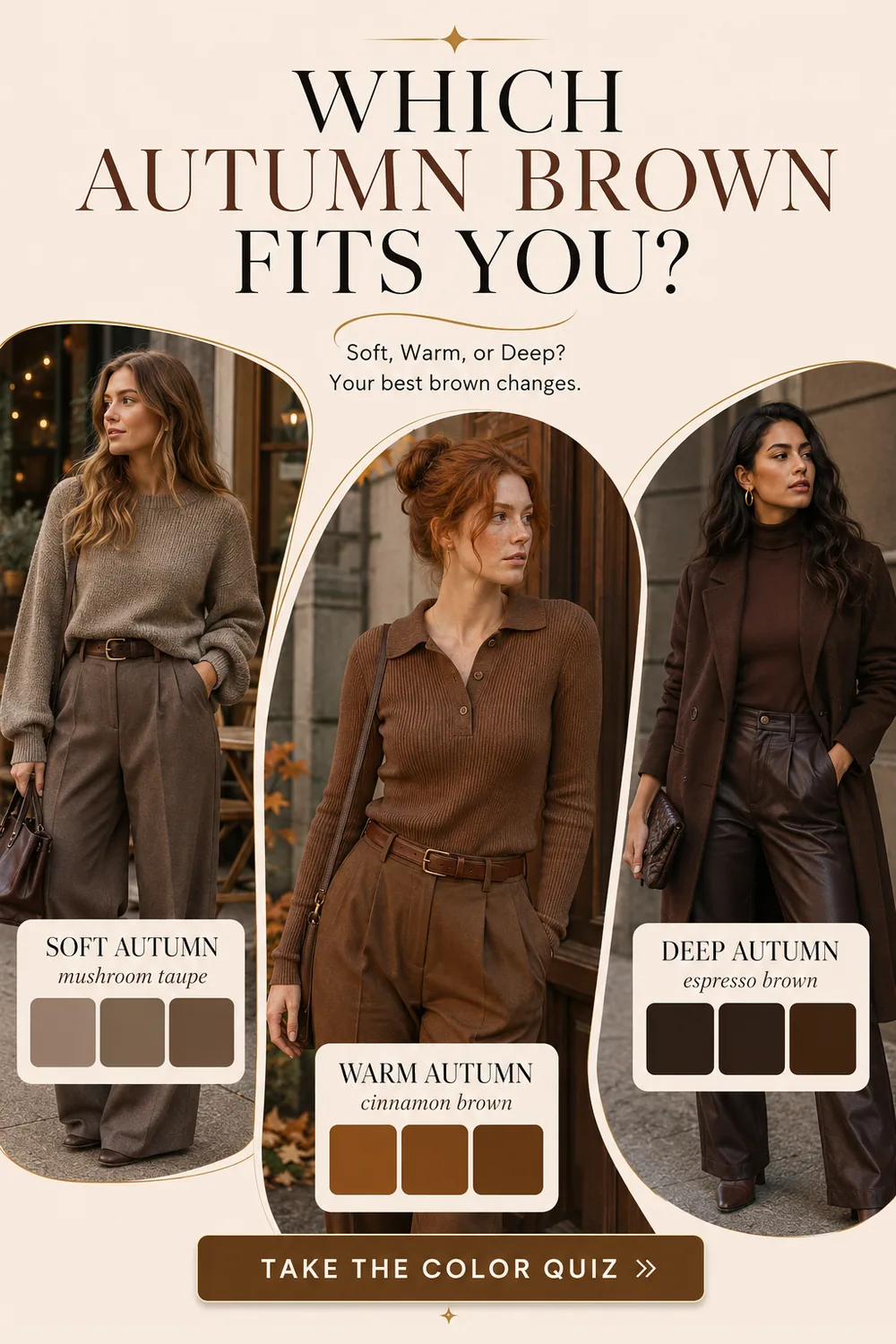
Cocoa brown

#8C6B56

soft, warm and your everyday dark

Deep slate

#36475F

the closest thing to black you own

Moss

#6A7C56

a dark neutral with green warmth in it

Warm taupe

#BFAE99

the lighter option for knits and coats

Skip these

Jet black

#010101

too dark and too cool for blended coloring

Cool slate grey

#58595B

a blue-grey that turns warm skin ashen

Optic white

#F6F6F6

the same hard edge as black, on the light side

Why black fights Soft Autumn

Value

light or dark

Soft Autumn sits in the middle of the light-to-dark scale, and hair, skin and eyes sit close together on it. Black is the darkest value there is. The gap between your face and the fabric is bigger than your features can hold, so the eye goes to the black first and to you second.
Hue

warm or cool

Black carries no warmth. Beside a golden or olive undertone it reads cold, and the skin answers by looking grey or sallow. Cocoa and moss keep the depth but bring the warmth back.

The shift that fixes it

Jet black

Cocoa brown

The left column is the Soft Autumn answer to black: a muted brown, mushroom to cocoa.

How to wear black as a Soft Autumn (when you have to)

Keep black below the collarbone: trousers, a skirt, boots, a bag. Whatever sits at your neckline should come from your own palette, so a black suit gets an oatmeal or terracotta top, and a black dress gets a soft camel scarf or a warm cardigan.

If black is already in the outfit, these are the shades that soften it best:

Warm oatmeal

the light layer between black and your face

Camel

warms black up instantly

Soft terracotta

a color accent that keeps the warmth

Muted jade

a cooler accent that still reads soft

Makeup and jewelry

Brushed gold or rose gold jewelry and a rosewood or terracotta lip give back most of what black takes away. Skip high-shine silver and the deep berry lip that black seems to ask for: together they make the contrast harsher, not better.

The common mistake

The usual mistake is rescuing a black outfit with a brighter lipstick. Brightness adds contrast, which is the problem in the first place. Add warmth and softness instead: a cream layer, a camel scarf, a muted lip.

What Soft Autumn wears instead of black

Match the job black usually does to the shade that does it better on you:

Deep slate

for the work blazer and the winter coat

#36475f

Rosewood

for the evening dress that would have been black

#b24c65

Cocoa brown

for boots, belts and bags

#8c6b56

Moss

for trousers and knitwear

#6a7c56

Not sure you're a Soft Autumn?

The answer on this page only holds if the season is right. For these neighbouring types, the verdict on black changes.

Frequently Asked Questions

Can Soft Autumn wear black trousers or jeans?
Yes. Black below the waist is far less of a problem for Soft Autumn than black at the neckline, because the color that matters most is the one reflecting light onto your face. Black trousers, jeans, skirts and boots are fine in a Soft Autumn wardrobe as long as the top half comes from the palette: an oatmeal knit, a soft terracotta blouse, a camel coat. If you are buying new, cocoa brown or deep slate trousers will still look softer and more expensive with your coloring than black.
What is the best black alternative for Soft Autumn?
Deep slate blue is the closest substitute for formal and office wear, because it reads as a serious dark neutral from a distance without the coldness of black. Cocoa brown is the everyday alternative for knits, boots and bags. For evening, swap the little black dress for rosewood or moss, which keep the drama but suit warm, muted skin. Charcoal can work too if it leans warm or brown; avoid the blue-grey kind, which drains Soft Autumn as badly as black does.
Can a Soft Autumn wear a black dress to a formal event?
If the dress code says black, you can still make it work. Choose a matte fabric rather than satin or sequins, since shine adds contrast. Wear brushed gold jewelry, a warm rosewood or terracotta lip, and keep your hair soft around the face. A camel or oatmeal wrap at the shoulders helps more than anything else. If the dress code only says formal, a rosewood, moss or deep slate dress will photograph better on you than black ever will. Your guests will remember the color on your face, not the color of the dress.
Why does black make Soft Autumn look tired?
Soft Autumn coloring is low contrast: hair, skin and eyes are close together in depth and all softly warm. Black is the darkest, coldest color there is. Next to the face it creates a hard edge that makes natural shadows under the eyes and around the mouth look deeper, and it pulls the warmth out of the skin so it looks grey. That is what people describe as looking tired. Colors with the same softness and warmth as your face do the opposite.

See every color that suits you on your own face

Your exact season, your full palette, the neutrals that work for you and the makeup shades that match, all from one photo.

Get my color analysis