What's the real difference between Cool Summer and Warm Autumn?
Undertone. Cool Summer is cool, built around shades like raspberry, deep teal and cool cerulean, while Warm Autumn is warm, built around burnt orange, golden ochre and olive green. Depth differs too, Cool Summer sitting at medium contrast against Warm Autumn at medium, but temperature is what you should test first. A palette on the wrong side of that line leaves skin looking sallow or grey however well the depth matches.
Are Cool Summer and Warm Autumn the same season?
No. Cool Summer belongs to Summer and Warm Autumn belongs to Autumn, two separate seasons in the twelve-type system. They also sit on opposite sides of the warm and cool line, which makes confusing them the more costly kind of mistake. The shades each one is named for do not transfer between them.
Which key colors define Cool Summer vs Warm Autumn?
Cool Summer is defined by raspberry, deep teal, cool cerulean and orchid. Cool Summer colors are blue-based and gently softened. They have real presence without the hard edge of a Winter palette. Warm Autumn is defined by burnt orange, golden ochre, olive green and warm brick. Warm Autumn colors are golden, rich, and earthy. They carry real depth without ever tipping into the cool clarity of a Winter palette. Metals are the quickest tell of all: Cool Summer wants silver or white gold, and Warm Autumn wants gold or rose gold.
Am I Cool Summer or Warm Autumn? How can I tell the difference?
Temperature first: hold raspberry and burnt orange fabric under your chin in daylight and watch which one evens out your skin instead of adding shadow. Then clarity, since both types sit at medium contrast: compare a clear raspberry against a more blended shade and see which one your face wears comfortably. Then metals: Cool Summer suits silver or white gold and Warm Autumn suits gold or rose gold. When two of the three agree, that is your answer.
Who are some celebrity examples of Cool Summer and Warm Autumn?
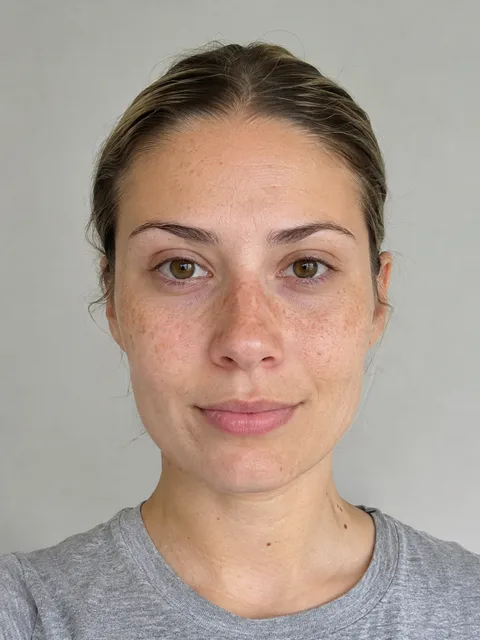
For Cool Summer, look at Jacqueline Kennedy, Dakota Fanning, Carey Mulligan and Emily Blunt. For Warm Autumn, look at Julia Roberts, Jennifer Lopez, Beyoncé and Halle Berry. Read them for the relationship between hair, skin and eyes rather than for individual outfits, since a stylist can put anyone in anything. Daylight photographs without heavy makeup or filters are far more useful here than red-carpet shots.
Why does getting Cool Summer vs Warm Autumn right matter?
Because the two palettes fail in opposite directions, and the failure is quiet rather than obvious. Wearing Warm Autumn colors as a Cool Summer lays a warm cast over cool skin, which shows up as dullness, grey under the eyes, or a yellow flatness people read as tiredness rather than as a wardrobe problem. It also costs money. Most of a wardrobe is neutrals and basics, and buying those on the wrong side of the line means every top you own works slightly against your face while none of them looks obviously wrong on the hanger. Metals compound it: Cool Summer suits silver or white gold and Warm Autumn suits gold or rose gold, so jewelry bought for the wrong season quietly undercuts the rest.
Can Cool Summer and Warm Autumn share any colors?
Not the same shades, but another 10 sit close enough that one garment could pass for either. Those near-matches are the softest, most neutral parts of each palette, where the gap narrows to a degree or two of warmth. Everything either season is known for stays on its own side: raspberry and deep teal for Cool Summer, burnt orange and golden ochre for Warm Autumn. Treat the near-matches as safe ground, not as proof the palettes are interchangeable.
What's the fastest way to confirm my season at home?
Stand at a window in indirect daylight, without makeup, in something that will not bounce color onto your face. Hold raspberry against burnt orange under your chin, one at a time, and watch your skin rather than the fabric: the right one evens out redness and softens the shadows under your eyes, and the wrong one adds a grey or yellow cast. Then repeat at your wrist with silver or white gold against gold or rose gold jewelry. Two signals pointing the same way is usually enough, and a photo-based analysis will confirm it in minutes.