What's the real difference between Warm Autumn and Deep Autumn?
Not undertone: both palettes are warm, so warm-versus-cool will not settle it. What differs is weight. Deep Autumn carries more depth than Warm Autumn, so the same warm family splits on how much darkness your coloring can hold. Hold mahogany next to burnt orange by your face: one will let your features read clearly, and the other will either flatten them or overpower them.
Are Warm Autumn and Deep Autumn the same season?
No. They are two types inside the same Autumn family, which is why they share warm undertones and still call for different colors. Warm Autumn is the warm version and Deep Autumn is the deep one, so their palettes sit at different levels of lightness and saturation. Being told you are "a Autumn" is only half an answer, and the half that decides your best shades is the type.
Which key colors define Warm Autumn vs Deep Autumn?
Warm Autumn is defined by burnt orange, golden ochre, olive green and warm brick. Warm Autumn colors are golden, rich, and earthy. They carry real depth without ever tipping into the cool clarity of a Winter palette. Deep Autumn is defined by mahogany, burgundy, deep olive and bronze gold. Deep Autumn colors carry weight. Every shade in your palette has depth and warmth — this is the richest, most saturated corner of the Autumn family. Metals will not help you choose between these two, since both want gold or rose gold.
Am I Warm Autumn or Deep Autumn? How can I tell the difference?
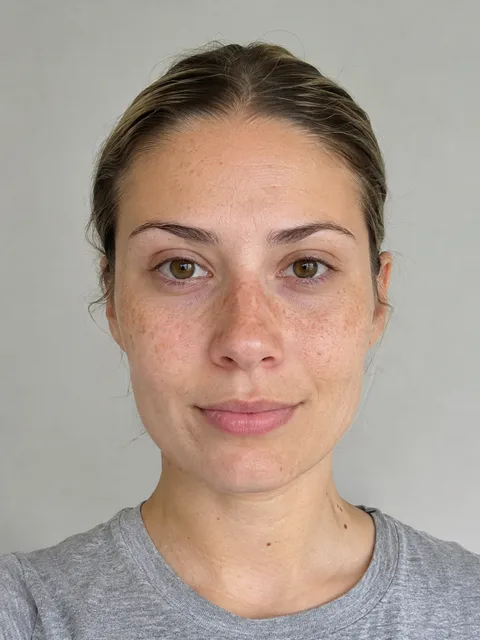
Skip the undertone test. Both are warm, so vein color, jewelry instinct and the usual warm-versus-cool questions will point both ways. Start with depth: Warm Autumn carries medium contrast between hair, skin and eyes where Deep Autumn carries high, so judge how much contrast your own bare-faced photo shows. Metals will not break the tie here, since both types want gold or rose gold. That leaves the fabric test as the deciding one, which is exactly why this pair is worth checking against a photo rather than a mirror.
Who are some celebrity examples of Warm Autumn and Deep Autumn?
For Warm Autumn, look at Julia Roberts, Jennifer Lopez, Beyoncé and Halle Berry. For Deep Autumn, look at Eva Mendes, Kelly Rowland, Sofía Vergara and Penélope Cruz. Read them for the relationship between hair, skin and eyes rather than for individual outfits, since a stylist can put anyone in anything. Daylight photographs without heavy makeup or filters are far more useful here than red-carpet shots.
Why does getting Warm Autumn vs Deep Autumn right matter?
Because the two palettes fail in opposite directions, and the failure is quiet rather than obvious. The mismatch is weight, so nothing clashes outright: Deep Autumn colors on a Warm Autumn sit too heavily on the face, and Warm Autumn colors on a Deep Autumn look washed out against it. It also costs money. Most of a wardrobe is neutrals and basics, and buying those on the wrong side of the line means every top you own works slightly against your face while none of them looks obviously wrong on the hanger. Jewelry is the one thing you can buy safely either way, since both types want gold or rose gold.
Can Warm Autumn and Deep Autumn share any colors?
Yes, a little. One shade appears in both palettes, and a large share of both palettes sits close enough that one garment could pass for either. The crossover is always in the muted mid-tones, never in the signature colors: burnt orange stays Warm Autumn, and mahogany stays Deep Autumn. If you genuinely cannot decide between the two, that overlap is where to build a small shared wardrobe.
What's the fastest way to confirm my season at home?
Stand at a window in indirect daylight, without makeup, in something that will not bounce color onto your face. Hold burnt orange against mahogany under your chin, one at a time, and watch your skin rather than the fabric: the right one evens out redness and softens the shadows under your eyes, and the wrong one adds a grey or yellow cast. Do it twice on different days, since both types want the same metals and jewelry cannot act as your second opinion here. Two readings that agree are usually enough, and a photo-based analysis will confirm it in minutes.