Palette Comparison

Warm Autumn vs Bright Winter Color Palette

Warm Autumn is a warm palette and Bright Winter is a cool one, so the two pull your complexion in opposite directions. Warm Autumn is Warm, medium contrast, while Bright Winter is cool and bright, very high contrast. Here are both palettes side by side, with the eye, skin, and hair traits behind them.

The difference is temperature

Is Warm Autumn the same as Bright Winter?

No. Warm Autumn is a warm Autumn type and Bright Winter is a cool Winter type, so they sit on opposite sides of the warm and cool line. The difference is undertone: Warm Autumn needs warm colors like burnt orange and golden ochre, and Bright Winter needs cool ones like hot pink and electric blue. Naming note: Warm Autumn is also called True Autumn, and Bright Winter is also called Clear Winter. Each palette is the same under either name.

Quick check: in daylight, hold something burnt orange and something hot pink under your chin, one at a time. The color that makes your skin look clearer and softens the shadows under your eyes points to your season.

Still between Warm Autumn and Bright Winter? Get your season from one photo

Where each palette sits

Measured from the eight signature shades of each palette and placed against all twelve types. The highlighted row is the one that decides it.

Warm Autumn Bright Winter
  • Temperature

    Decides it
    Warm Autumn Bright Winter
    Cool Warm
  • Depth

    Warm Autumn Bright Winter
    Light Deep
  • Clarity

    Warm Autumn Bright Winter
    Soft Bright

The Warm Autumn and Bright Winter Palettes

Each type's eight signature shades. Read them as a set rather than one color at a time: it's the overall temperature and clarity that separates these two palettes.

Autumn Season

Warm Autumn

Golden, spicy, and inviting. Medium contrast with the purest warmth of the earthy seasons.

Undertone
warm · Warm
Contrast
Medium
Best metals
gold, rose gold

Signature shades

Burnt Orange

Your signature shade

Golden Ochre

Sunlit and mellow

Olive Green

Earthy and grounded

Warm Brick

Rich and deep

Deep Teal

Your cool accent

Terracotta

Warm and inviting

Warm Sand

Everyday light neutral

Chestnut

Your best warm dark

Warm Autumn colors are golden, rich, and earthy. They carry real depth without ever tipping into the cool clarity of a Winter palette.

Full Warm Autumn guide

Winter Season

Bright Winter

Electric, pure, and vibrant. The highest contrast of all, with the most saturated colors.

Undertone
cool · Bright
Contrast
Very High
Best metals
silver, white gold

Signature shades

Hot Pink

Your signature shade

Electric Blue

Vivid and clear

Bright Emerald

Pure jewel tone

Bright Violet

Saturated and cool

Clear Green

Electric and fresh

Bright Aqua

Cool and luminous

Icy Periwinkle

Your lightest accent

Pure White

Crisp and clean

Bright Winter colors are the most saturated of all twelve types. Clarity is non-negotiable — every shade should look pure rather than blended.

Full Bright Winter guide

Where the two palettes meet

No shade appears in both palettes, but 2 are close enough that one garment could pass for either. These are the safe picks if you are still deciding.

Try both on your face

Warm Autumn or Bright Winter? Let your face decide

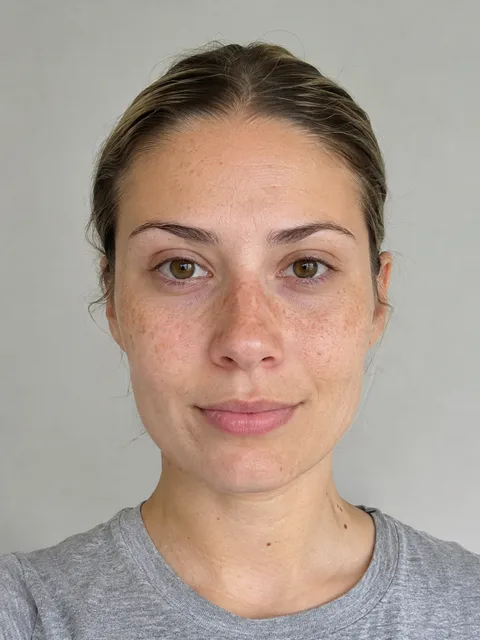
Five blind pairs, one shade from each palette in the same color family. Pick the one that makes your skin look clearer. The names stay hidden until the end.

Showing the example face

Your photo stays in this browser. Nothing is uploaded.

Pair 1 of 5

Which one makes your skin look clearer?

Look at your jaw and under your eyes, not at the fabric.

Key Characteristics

The coloring each palette is built around. Where you land on these three is what decides which of the two is yours.

Eyes

Warm Autumn

Amber, golden hazel, warm brown, or golden green, very often with visible gold flecking around the pupil.

Bright Winter

Bright green, bright blue, cyan, or turquoise, with a very sharp iris edge. This clarity is the defining feature of the season.

Skin

Warm Autumn

Warm ivory through to olive with golden or peachy undertones. Warm Autumn skin tans readily and looks noticeably healthier beside gold than silver.

Bright Winter

Olive or with cool blue undertones, from fair through to deep. Bright Winter skin has a clear, almost translucent quality rather than a muted one.

Hair

Warm Autumn

Red, auburn, copper, or golden brown. Warm Autumn has the strongest red and copper representation of any season.

Bright Winter

Medium to dark brown or black. The gap between dark hair and bright eyes is what creates your exceptional contrast.

Not sure which season you are? Take the quiz

One photo tells you whether you are a Warm Autumn, a Bright Winter, or one of the other ten types, with your full palette and a preview on your own face.

Get my color analysis

Warm Autumn vs Bright Winter Celebrities

Style icons for each palette. Comparing two faces you already know is often quicker than comparing swatches.

Warm Autumn

  • Julia Roberts
  • Jennifer Lopez
  • Beyoncé
  • Halle Berry

Bright Winter

  • Courteney Cox
  • Krysten Ritter
  • Megan Fox
  • Monica Bellucci

Frequently Asked Questions

What's the real difference between Warm Autumn and Bright Winter?
Undertone. Warm Autumn is warm, built around shades like burnt orange, golden ochre and olive green, while Bright Winter is cool, built around hot pink, electric blue and bright emerald. Depth differs too, Warm Autumn sitting at medium contrast against Bright Winter at very high, but temperature is what you should test first. A palette on the wrong side of that line leaves skin looking sallow or grey however well the depth matches.
Are Warm Autumn and Bright Winter the same season?
No. Warm Autumn belongs to Autumn and Bright Winter belongs to Winter, two separate seasons in the twelve-type system. They also sit on opposite sides of the warm and cool line, which makes confusing them the more costly kind of mistake. The shades each one is named for do not transfer between them.
Which key colors define Warm Autumn vs Bright Winter?
Warm Autumn is defined by burnt orange, golden ochre, olive green and warm brick. Warm Autumn colors are golden, rich, and earthy. They carry real depth without ever tipping into the cool clarity of a Winter palette. Bright Winter is defined by hot pink, electric blue, bright emerald and bright violet. Bright Winter colors are the most saturated of all twelve types. Clarity is non-negotiable — every shade should look pure rather than blended. Metals are the quickest tell of all: Warm Autumn wants gold or rose gold, and Bright Winter wants silver or white gold.
Am I Warm Autumn or Bright Winter? How can I tell the difference?
Temperature first: hold burnt orange and hot pink fabric under your chin in daylight and watch which one evens out your skin instead of adding shadow. Then depth: Warm Autumn carries medium contrast between hair, skin and eyes where Bright Winter carries very high, so judge how much contrast your own bare-faced photo shows. Then metals: Warm Autumn suits gold or rose gold and Bright Winter suits silver or white gold. When two of the three agree, that is your answer.
Who are some celebrity examples of Warm Autumn and Bright Winter?
For Warm Autumn, look at Julia Roberts, Jennifer Lopez, Beyoncé and Halle Berry. For Bright Winter, look at Courteney Cox, Krysten Ritter, Megan Fox and Monica Bellucci. Read them for the relationship between hair, skin and eyes rather than for individual outfits, since a stylist can put anyone in anything. Daylight photographs without heavy makeup or filters are far more useful here than red-carpet shots.
Why does getting Warm Autumn vs Bright Winter right matter?
Because the two palettes fail in opposite directions, and the failure is quiet rather than obvious. Wearing Bright Winter colors as a Warm Autumn lays a cool cast over warm skin, which shows up as dullness, grey under the eyes, or a yellow flatness people read as tiredness rather than as a wardrobe problem. It also costs money. Most of a wardrobe is neutrals and basics, and buying those on the wrong side of the line means every top you own works slightly against your face while none of them looks obviously wrong on the hanger. Metals compound it: Warm Autumn suits gold or rose gold and Bright Winter suits silver or white gold, so jewelry bought for the wrong season quietly undercuts the rest.
Can Warm Autumn and Bright Winter share any colors?
Not the same shades, but another 2 sit close enough that one garment could pass for either. Those near-matches are the softest, most neutral parts of each palette, where the gap narrows to a degree or two of warmth. Everything either season is known for stays on its own side: burnt orange and golden ochre for Warm Autumn, hot pink and electric blue for Bright Winter. Treat the near-matches as safe ground, not as proof the palettes are interchangeable.
What's the fastest way to confirm my season at home?
Stand at a window in indirect daylight, without makeup, in something that will not bounce color onto your face. Hold burnt orange against hot pink under your chin, one at a time, and watch your skin rather than the fabric: the right one evens out redness and softens the shadows under your eyes, and the wrong one adds a grey or yellow cast. Then repeat at your wrist with gold or rose gold against silver or white gold jewelry. Two signals pointing the same way is usually enough, and a photo-based analysis will confirm it in minutes.

Browse All Palettes

All twelve color seasons, three to a family. Open any one for its full palette, traits and celebrity examples.

Is your palette Warm Autumn or Bright Winter? Find out in one photo

Upload a single photo and get your exact type, your complete palette, makeup shades, and color combinations.

Get my color analysis