What's the real difference between Light Spring and Deep Winter?
Undertone. Light Spring is warm, built around shades like soft peach, light coral and butter yellow, while Deep Winter is cool, built around deep violet, true red and pine green. Depth differs too, Light Spring sitting at low contrast against Deep Winter at high, but temperature is what you should test first. A palette on the wrong side of that line leaves skin looking sallow or grey however well the depth matches.
Are Light Spring and Deep Winter the same season?
No. Light Spring belongs to Spring and Deep Winter belongs to Winter, two separate seasons in the twelve-type system. They also sit on opposite sides of the warm and cool line, which makes confusing them the more costly kind of mistake. The shades each one is named for do not transfer between them.
Which key colors define Light Spring vs Deep Winter?
Light Spring is defined by soft peach, light coral, butter yellow and spring mint. Light Spring colors are warm, light, and clear. Worn near your face they lift your complexion without ever overpowering your delicate coloring. Deep Winter is defined by deep violet, true red, pine green and deep sapphire. Deep Winter colors are dark, cool, and saturated. This is the only palette in the system where true black is a genuine hero rather than a compromise. Metals are the quickest tell of all: Light Spring wants gold or rose gold, and Deep Winter wants silver or white gold.
Am I Light Spring or Deep Winter? How can I tell the difference?
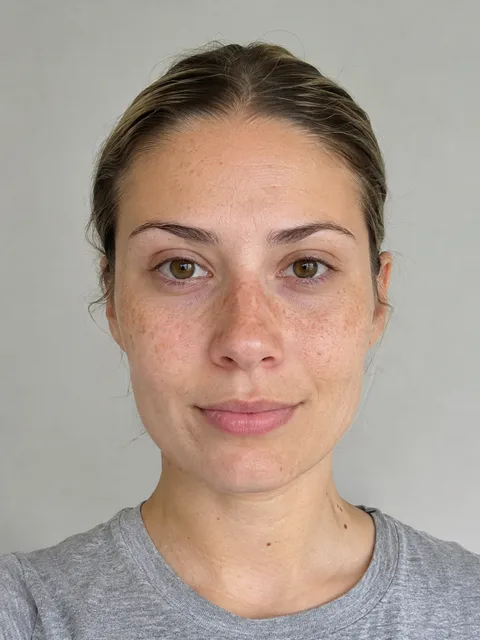
Temperature first: hold soft peach and deep violet fabric under your chin in daylight and watch which one evens out your skin instead of adding shadow. Then depth: Light Spring carries low contrast between hair, skin and eyes where Deep Winter carries high, so judge how much contrast your own bare-faced photo shows. Then metals: Light Spring suits gold or rose gold and Deep Winter suits silver or white gold. When two of the three agree, that is your answer.
Who are some celebrity examples of Light Spring and Deep Winter?
For Light Spring, look at Amanda Seyfried, Scarlett Johansson, Kate Hudson and Léa Seydoux. For Deep Winter, look at Anne Hathaway, Kim Kardashian, Sandra Oh and Lupita Nyong'o. Read them for the relationship between hair, skin and eyes rather than for individual outfits, since a stylist can put anyone in anything. Daylight photographs without heavy makeup or filters are far more useful here than red-carpet shots.
Why does getting Light Spring vs Deep Winter right matter?
Because the two palettes fail in opposite directions, and the failure is quiet rather than obvious. Wearing Deep Winter colors as a Light Spring lays a cool cast over warm skin, which shows up as dullness, grey under the eyes, or a yellow flatness people read as tiredness rather than as a wardrobe problem. It also costs money. Most of a wardrobe is neutrals and basics, and buying those on the wrong side of the line means every top you own works slightly against your face while none of them looks obviously wrong on the hanger. Metals compound it: Light Spring suits gold or rose gold and Deep Winter suits silver or white gold, so jewelry bought for the wrong season quietly undercuts the rest.
Can Light Spring and Deep Winter share any colors?
Effectively not. The two palettes share no shade and nothing close enough to substitute, which is what you would expect given an undertone difference this clear. Wearing one season's colors as the other is visible in daylight even to someone who knows nothing about color analysis. If you love a color from the wrong list, keep it below the waist.
What's the fastest way to confirm my season at home?
Stand at a window in indirect daylight, without makeup, in something that will not bounce color onto your face. Hold soft peach against deep violet under your chin, one at a time, and watch your skin rather than the fabric: the right one evens out redness and softens the shadows under your eyes, and the wrong one adds a grey or yellow cast. Then repeat at your wrist with gold or rose gold against silver or white gold jewelry. Two signals pointing the same way is usually enough, and a photo-based analysis will confirm it in minutes.