Palette Comparison

Deep Autumn vs Cool Winter Color Palette

Deep Autumn is a warm palette and Cool Winter is a cool one, so the two pull your complexion in opposite directions. Deep Autumn is warm and deep, high contrast, while Cool Winter is Cool, high contrast. Here are both palettes side by side, with the eye, skin, and hair traits behind them.

The difference is temperature

Is Deep Autumn the same as Cool Winter?

No. Deep Autumn is a warm Autumn type and Cool Winter is a cool Winter type, so they sit on opposite sides of the warm and cool line. The difference is undertone: Deep Autumn needs warm colors like mahogany and burgundy, and Cool Winter needs cool ones like true fuchsia and royal blue. Naming note: Deep Autumn is also called Dark Autumn, and Cool Winter is also called True Winter. Each palette is the same under either name.

Quick check: in daylight, hold something mahogany and something true fuchsia under your chin, one at a time. The color that makes your skin look clearer and softens the shadows under your eyes points to your season.

Still between Deep Autumn and Cool Winter? Get your season from one photo

Where each palette sits

Measured from the eight signature shades of each palette and placed against all twelve types. The highlighted row is the one that decides it.

Deep Autumn Cool Winter
  • Temperature

    Decides it
    Deep Autumn Cool Winter
    Cool Warm
  • Depth

    Deep Autumn Cool Winter
    Light Deep
  • Clarity

    Deep Autumn Cool Winter
    Soft Bright

The Deep Autumn and Cool Winter Palettes

Each type's eight signature shades. Read them as a set rather than one color at a time: it's the overall temperature and clarity that separates these two palettes.

Autumn Season

Deep Autumn

Dark, luxurious, and intense. High contrast with rich chocolate, burgundy, and forest tones.

Undertone
warm · Deep
Contrast
High
Best metals
gold, rose gold

Signature shades

Mahogany

Your signature shade

Burgundy

Deep and luxurious

Deep Olive

Dark and earthy

Bronze Gold

Rich metallic warmth

Forest Teal

Your cool accent

Burnt Sienna

Warm and intense

Chocolate

Everyday deep neutral

Warm Buff

Your best light base

Deep Autumn colors carry weight. Every shade in your palette has depth and warmth — this is the richest, most saturated corner of the Autumn family.

Full Deep Autumn guide

Winter Season

Cool Winter

Striking, sophisticated, and icy. High contrast with vivid blue-based brights and true neutrals.

Undertone
cool · Cool
Contrast
High
Best metals
silver, white gold

Signature shades

True Fuchsia

Your signature shade

Royal Blue

Vivid and clear

Emerald

Cool jewel tone

True Violet

Rich and cool

Icy Aqua

Frosted and light

Icy Orchid

Your softest accent

Deep Navy

Your best dark

Pure White

Crisp and clean

Cool Winter colors are blue-based, clear, and saturated. Icy pastels and true jewel tones both work — what matters is that nothing is muddied with warmth.

Full Cool Winter guide

Where the two palettes meet

No shade appears in both palettes, but 2 are close enough that one garment could pass for either. These are the safe picks if you are still deciding.

Try both on your face

Deep Autumn or Cool Winter? Let your face decide

Five blind pairs, one shade from each palette in the same color family. Pick the one that makes your skin look clearer. The names stay hidden until the end.

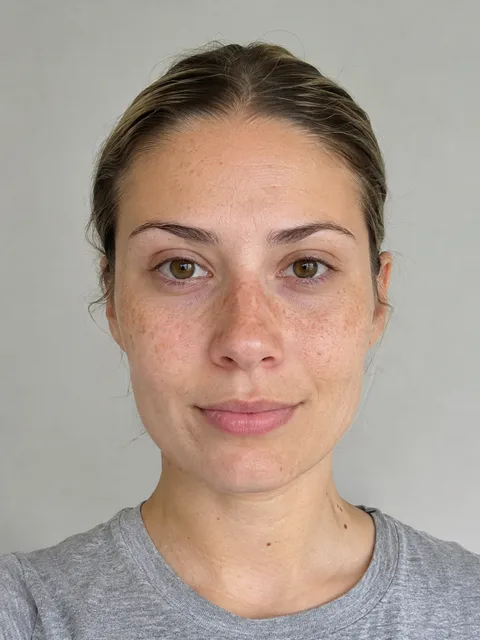
Showing the example face

Your photo stays in this browser. Nothing is uploaded.

Pair 1 of 5

Which one makes your skin look clearer?

Look at your jaw and under your eyes, not at the fabric.

Key Characteristics

The coloring each palette is built around. Where you land on these three is what decides which of the two is yours.

Eyes

Deep Autumn

Dark blue, deep green, dark hazel, dark brown, or nearly black, usually with warm golden or olive tones visible up close.

Cool Winter

Light brown, cool hazel, blue, or icy grey, usually with a sharply defined ring around the iris that contributes to your contrast.

Skin

Deep Autumn

Ivory, olive, or medium to deep with golden-olive warm undertones. Deep Autumn skin holds a tan well and rarely looks pink.

Cool Winter

Olive, or fair to medium with cool pink or blue undertones. Cool Winter skin looks noticeably better beside pure white than beside cream.

Hair

Deep Autumn

Medium to dark brown with a golden shine, or dark auburn. There is warmth in it even at the darkest depths.

Cool Winter

Ashy blonde, dark brown, black, or cool ash brown. There is no golden or coppery cast even in the lighter shades.

Not sure which season you are? Take the quiz

One photo tells you whether you are a Deep Autumn, a Cool Winter, or one of the other ten types, with your full palette and a preview on your own face.

Get my color analysis

Deep Autumn vs Cool Winter Celebrities

Style icons for each palette. Comparing two faces you already know is often quicker than comparing swatches.

Deep Autumn

  • Eva Mendes
  • Kelly Rowland
  • Sofía Vergara
  • Penélope Cruz

Cool Winter

  • Liv Tyler
  • Elizabeth Taylor
  • Lucy Liu
  • Aishwarya Rai

Frequently Asked Questions

What's the real difference between Deep Autumn and Cool Winter?
Undertone. Deep Autumn is warm, built around shades like mahogany, burgundy and deep olive, while Cool Winter is cool, built around true fuchsia, royal blue and emerald. Depth differs too, Deep Autumn sitting at high contrast against Cool Winter at high, but temperature is what you should test first. A palette on the wrong side of that line leaves skin looking sallow or grey however well the depth matches.
Are Deep Autumn and Cool Winter the same season?
No. Deep Autumn belongs to Autumn and Cool Winter belongs to Winter, two separate seasons in the twelve-type system. They also sit on opposite sides of the warm and cool line, which makes confusing them the more costly kind of mistake. The shades each one is named for do not transfer between them.
Which key colors define Deep Autumn vs Cool Winter?
Deep Autumn is defined by mahogany, burgundy, deep olive and bronze gold. Deep Autumn colors carry weight. Every shade in your palette has depth and warmth — this is the richest, most saturated corner of the Autumn family. Cool Winter is defined by true fuchsia, royal blue, emerald and true violet. Cool Winter colors are blue-based, clear, and saturated. Icy pastels and true jewel tones both work — what matters is that nothing is muddied with warmth. Metals are the quickest tell of all: Deep Autumn wants gold or rose gold, and Cool Winter wants silver or white gold.
Am I Deep Autumn or Cool Winter? How can I tell the difference?
Temperature first: hold mahogany and true fuchsia fabric under your chin in daylight and watch which one evens out your skin instead of adding shadow. Then clarity, since both types sit at high contrast: compare a clear true fuchsia against a more blended shade and see which one your face wears comfortably. Then metals: Deep Autumn suits gold or rose gold and Cool Winter suits silver or white gold. When two of the three agree, that is your answer.
Who are some celebrity examples of Deep Autumn and Cool Winter?
For Deep Autumn, look at Eva Mendes, Kelly Rowland, Sofía Vergara and Penélope Cruz. For Cool Winter, look at Liv Tyler, Elizabeth Taylor, Lucy Liu and Aishwarya Rai. Read them for the relationship between hair, skin and eyes rather than for individual outfits, since a stylist can put anyone in anything. Daylight photographs without heavy makeup or filters are far more useful here than red-carpet shots.
Why does getting Deep Autumn vs Cool Winter right matter?
Because the two palettes fail in opposite directions, and the failure is quiet rather than obvious. Wearing Cool Winter colors as a Deep Autumn lays a cool cast over warm skin, which shows up as dullness, grey under the eyes, or a yellow flatness people read as tiredness rather than as a wardrobe problem. It also costs money. Most of a wardrobe is neutrals and basics, and buying those on the wrong side of the line means every top you own works slightly against your face while none of them looks obviously wrong on the hanger. Metals compound it: Deep Autumn suits gold or rose gold and Cool Winter suits silver or white gold, so jewelry bought for the wrong season quietly undercuts the rest.
Can Deep Autumn and Cool Winter share any colors?
Not the same shades, but another 2 sit close enough that one garment could pass for either. Those near-matches are the softest, most neutral parts of each palette, where the gap narrows to a degree or two of warmth. Everything either season is known for stays on its own side: mahogany and burgundy for Deep Autumn, true fuchsia and royal blue for Cool Winter. Treat the near-matches as safe ground, not as proof the palettes are interchangeable.
What's the fastest way to confirm my season at home?
Stand at a window in indirect daylight, without makeup, in something that will not bounce color onto your face. Hold mahogany against true fuchsia under your chin, one at a time, and watch your skin rather than the fabric: the right one evens out redness and softens the shadows under your eyes, and the wrong one adds a grey or yellow cast. Then repeat at your wrist with gold or rose gold against silver or white gold jewelry. Two signals pointing the same way is usually enough, and a photo-based analysis will confirm it in minutes.

Browse All Palettes

All twelve color seasons, three to a family. Open any one for its full palette, traits and celebrity examples.

Is your palette Deep Autumn or Cool Winter? Find out in one photo

Upload a single photo and get your exact type, your complete palette, makeup shades, and color combinations.

Get my color analysis