
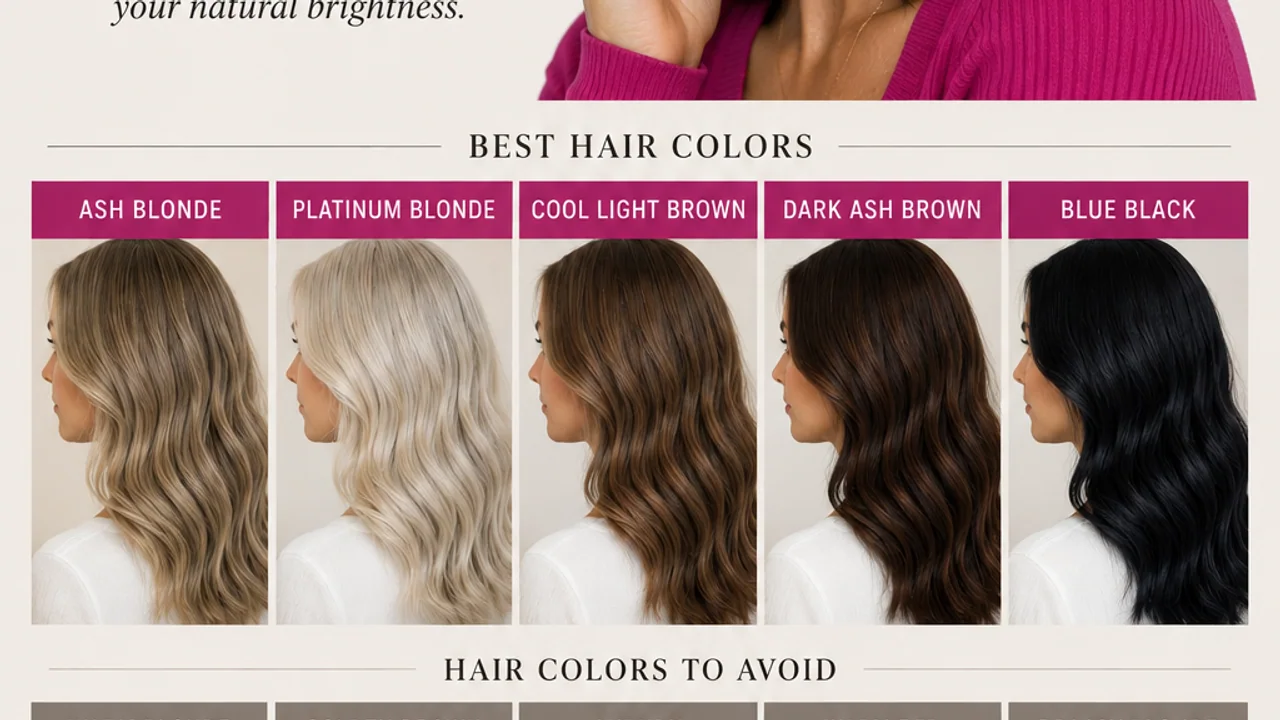
Bright Winter Hair Color: Best Shades and What to Avoid
The best Bright Winter hair colors by depth, the shades to avoid and why, highlights and gloss, going grey, brow color and exactly what to ask your colorist.
You know you are a Bright Winter. You have seen what fuchsia and cobalt do for your face. And then you sit in the salon chair, the colorist suggests “something softer, maybe a little caramel around the face”, and you leave with hair that makes you look tired for the next three months.
Hair is the biggest color decision you wear every day, and it is the one where Bright Winter goes wrong most often, because the trends of the last decade all pull toward warm, blended and soft. This guide gives you the shades that work at every depth, the ones to refuse and why, and the exact words to use with your colorist.
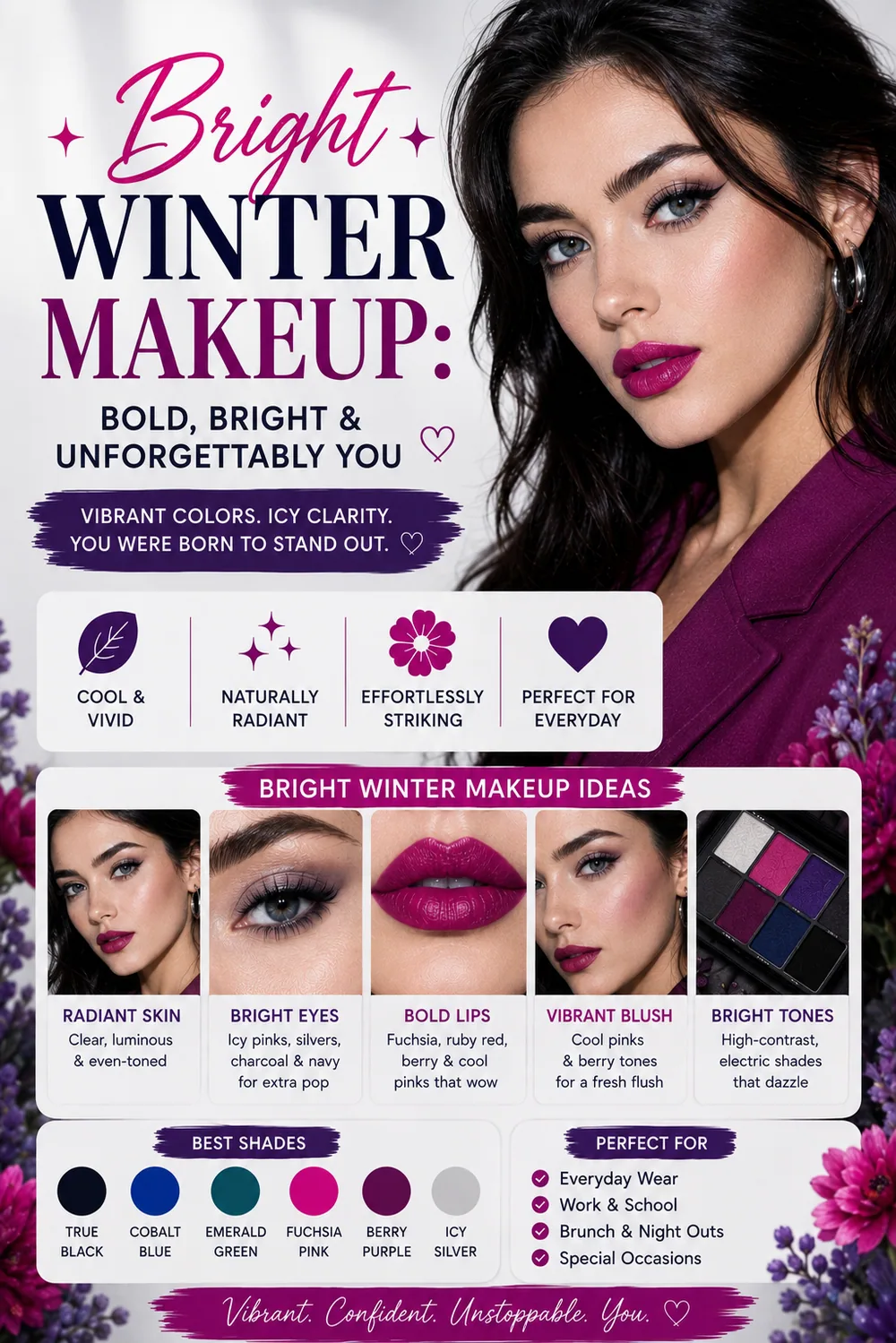
It follows the Bright Winter color palette. Bright Winter is also called Clear Winter, so if your result used that name, everything here applies.
Why Hair Color Matters So Much for Bright Winter
Bright Winter is defined by contrast and clarity: usually dark hair, clear skin and bright eyes, with a cool undertone underneath. Your hair is the largest single block of color next to your face, so it sets the contrast level for everything else. Keep it deep, cool and glossy and the contrast stays high. Warm it or soften it and the whole face drops a level, which is why the wrong hair color can make the right clothes look wrong.
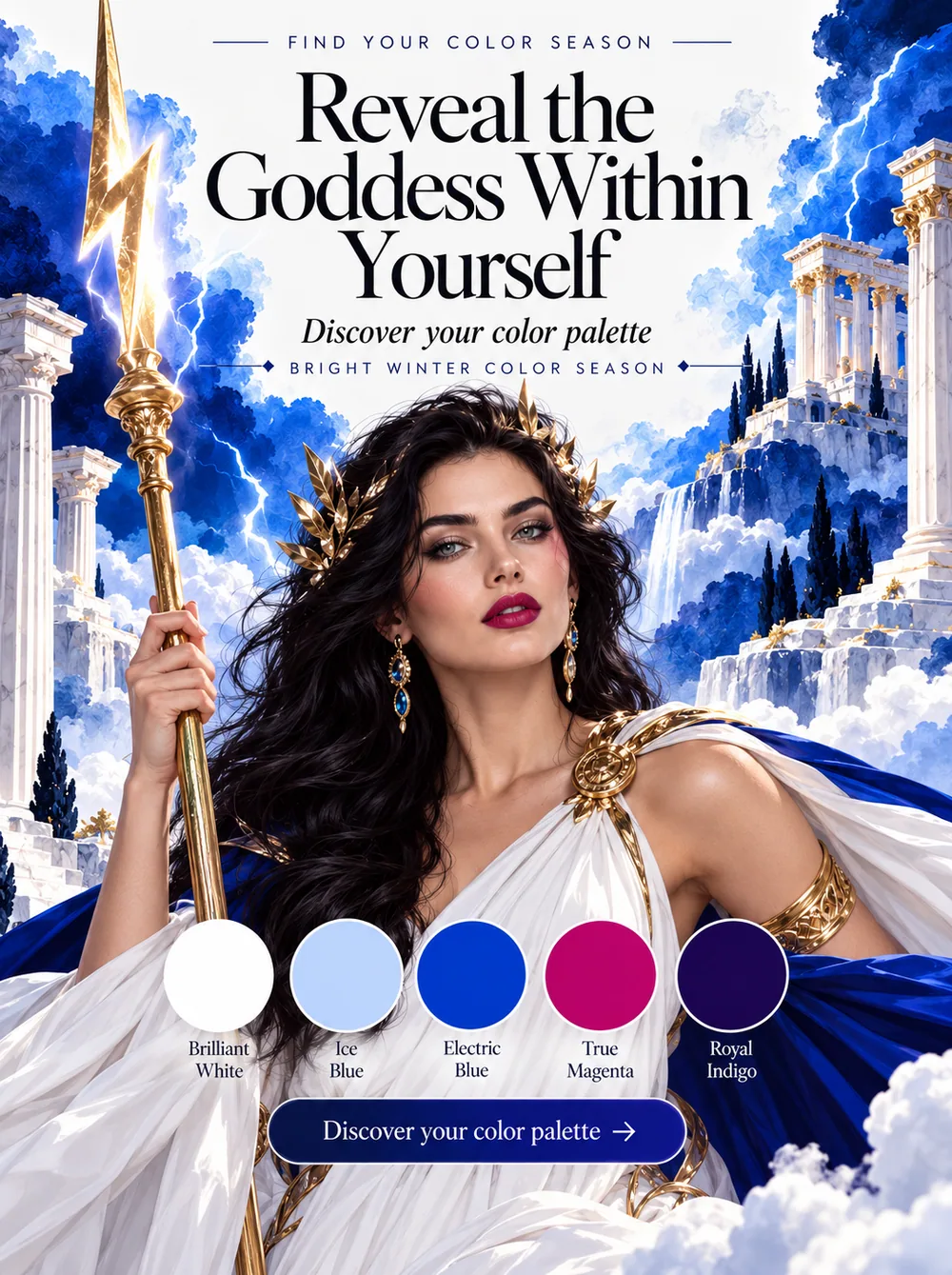
Best Bright Winter Hair Colors by Depth
Most Bright Winters have dark hair naturally, and the best color is usually a cleaner, glossier version of what you already have. The lighter options exist, but only for a specific combination of traits.
Dark: The Bright Winter Default
For most Bright Winters. Glossy, cool and close to your natural depth.
-
Blue-Black
#0B0B14
Maximum contrast
-
True Black
#0D0D0D
Clean and glossy
-
Cool Espresso
#241C1E
Black, softened slightly
-
Cool Dark Brown
#3B2F2F
No red, no gold
Medium and Light: The Exceptions
Only with deeper skin, dark brows or very bright eyes to keep the contrast.
-
Cool Medium Brown
#5A4A44
Clear, never mousy
-
Icy Blonde
#D9D4C7
Bright and cool
-
Platinum
#ECEAE4
Against deeper skin
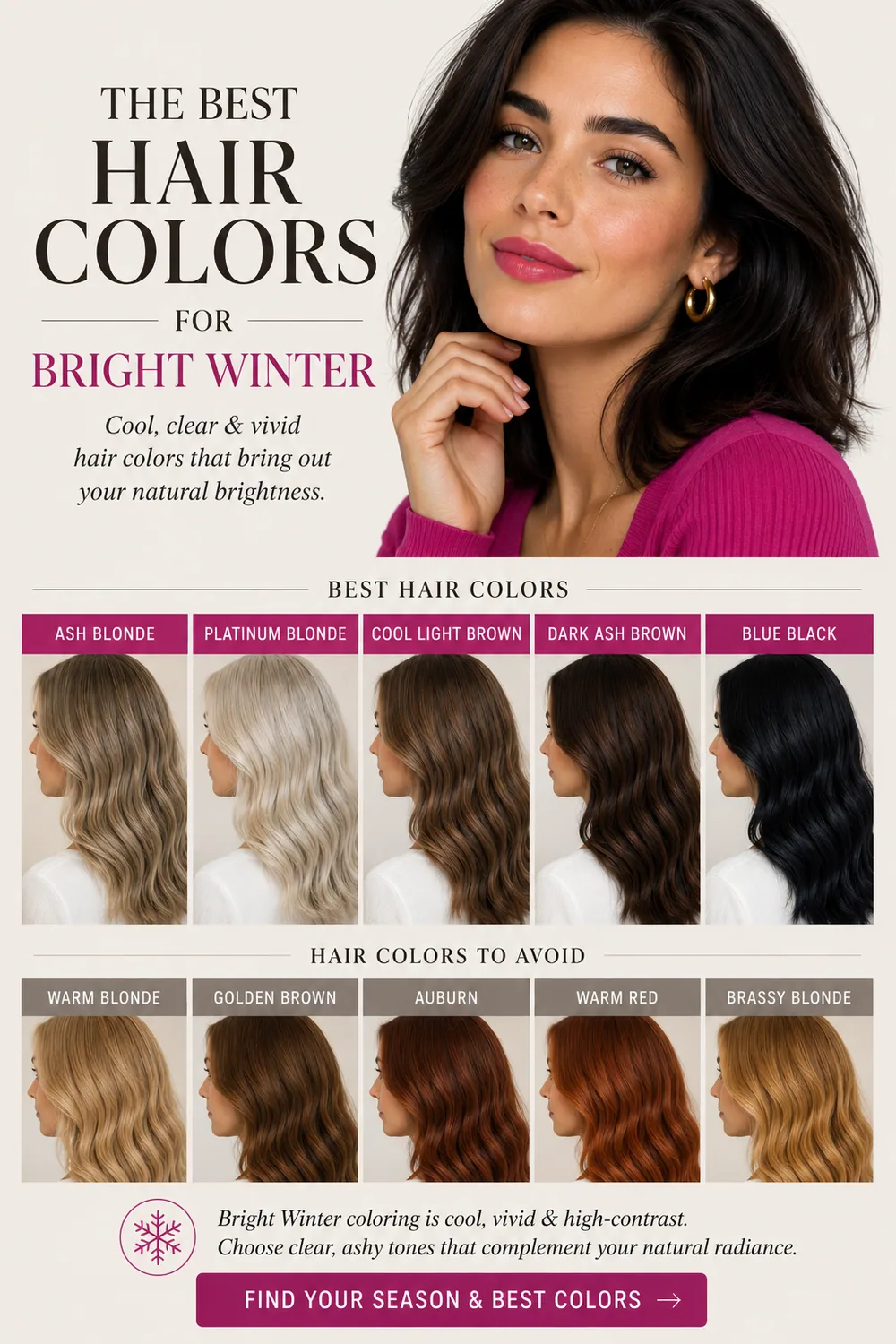
A word on the word “ash”. Colorists use it for any cool tone, but for you it has to mean cool and clean, not grey and flat. The “dark ash brown” on the sheet works because it is deep and glossy. A light, matte ash brown that reads as mousy is the opposite of what your face needs.
Hair Colors to Avoid, and Why
The shades that hurt a Bright Winter are warm, muted, or both. Each of them is a popular salon request, which is why it is worth knowing exactly why they fail.
Ask For
- Glossy true black , keeps your contrast at its highest
- Cool espresso , softer than black, still clear
- Cool dark brown , depth without warmth
- Platinum , only with deep skin and dark brows
Instead Of
- Golden blonde , warms cool skin and looks brassy
- Caramel balayage , adds warmth and blurs your contrast
- Auburn , red warmth that fights your undertone
- Copper , makes cool skin look sallow
- Mousy ash brown , cool but dull, it flattens the face
Highlights, Balayage and Gloss
Bright Winter is the season most damaged by the balayage era. Warm ribbons of caramel and honey do two things at once: they add warmth near the face and they blur the clean line between hair and skin. Both lower your contrast.
If you want dimension, there are better routes. Cool lowlights a shade or two deeper than your base add depth without warmth. Very fine, cool highlights can work on medium brown hair if they stay clearly separate rather than melted together. And a clear or cool gloss over dark hair adds the shine people are usually chasing when they ask for highlights.
Going Grey as a Bright Winter
During the transition, cool lowlights blend regrowth into dark hair better than warm highlights, which turn brassy within weeks. Once the grey is in, keep it bright with a purple or silver shampoo and a glossing treatment. Keep your brows defined and your lipstick clear: as the hair lightens, the face has to carry more of the contrast.
Eyebrow Color
Brows frame the contrast of your face as much as your hair does. They should be cool and defined.
Bright Winter Brow Shades
Match your hair's depth, keep the tone cool, keep the shape crisp.
-
Soft Black
#1C1A1A
For black hair
-
Cool Dark Brown
#3B2F2F
For dark brown hair
-
Ash Taupe
#6E6560
For platinum or icy blonde
Warm brown and auburn brow pencils look reddish against cool skin, and brows that are much lighter than your hair erase definition. Black liner and black mascara suit you for the same reason dark hair does.
What to Ask Your Colorist
Bring a photo, but bring words too. These are the phrases that get you the right result.
Say "cool and glossy"
Ask for a cool or neutral-cool tone with a high-shine finish. Avoid the words warm, golden, honey and caramel entirely.
Say "no warmth near my face"
Face-framing highlights are where warmth does the most damage. If you want brightness there, ask for a gloss rather than lighter pieces.
Ask for lowlights, not highlights
For dimension on dark hair, cool lowlights one or two shades deeper than your base keep the contrast high.
Ask about toner
A blue or violet toner keeps dark hair from turning red and blonde from turning brassy. Ask how often you should refresh it.
Know Your Season Before You Color
Hair color is the most expensive mistake in this whole system to undo. If your season came from a quiz or a friend, confirm it first: a True Winter would wear the same dark shades with less clarity, and a Bright Spring would need warm, clear shades instead.
The AI analysis reads your undertone, contrast and clarity from one photo and returns your season with a full palette, including hair guidance.
Related Reading
- Bright Winter Color Palette Guide is the full palette, traits, makeup and wardrobe behind this advice.
- Bright Winter Color Analysis is the pillar page with the palette and FAQ in brief.
- What Hair Color Suits Me? lets you test shades against your coloring before booking.
- Bright Spring vs Bright Winter explains the warm-cool split that decides whether golden or icy hair suits you.
- True Winter Color Palette is your cooler, less vivid neighbor.
- The 12 Color Seasons shows where Bright Winter sits among all twelve.
FAQ: Bright Winter Hair Color
What is the best hair color for a Bright Winter?
Can a Bright Winter be blonde?
What hair colors should a Bright Winter avoid?
Is balayage good for Bright Winter?
Should a Bright Winter go grey?
What eyebrow color suits a Bright Winter?
Discover Your Best Colors
Take a quick quiz and get AI-powered seasonal color analysis with personalized recommendations.