

True Winter Color Palette: Your Complete 2026 Color Guide
Your complete true winter color palette: cool jewel tones with hex codes, physical traits, celebrity examples, plus clothing, makeup and hair advice that actually works.
You have probably been told you look “washed out” in soft, muted colors, and you have quietly agreed while not understanding why. The beige sweater everyone praised on your friend makes you look tired. The dusty rose that flatters your sister drains you gray.
Here is the reversal: nothing is wrong with your face. You have simply been dressing against your coloring. If you belong to the True Winter palette, your skin reads best with cool, clear, saturated color, the loud jewel tones most people are scared of. Icy pink, true red, sapphire, black. The colors that overwhelm everyone else are the ones that make you look awake.
The true winter color palette is the coolest and most contrasting of the twelve seasons, sitting between Bright Winter and Dark Winter on the color wheel. This guide covers how to recognize True Winter coloring, the full palette with hex codes, the shades to keep out of your closet, and exactly how to apply it to clothing, makeup and hair in 2026.
What Makes You a True Winter
Warmth is your enemy, and it always has been. Every honey highlight, every camel coat, every “flattering” peach lipstick has quietly drained your face, and no one could tell you why. The answer is that you sit at the coolest point of the entire color wheel.
Seasonal analysis places each season on three axes: warm to cool, light to dark, and bright to muted. True Winter is defined by the first one. It is primarily cool, moderately deep, and clear rather than muted. Where Bright Winter leans toward maximum brightness and can tolerate a whisper of warmth, and Dark Winter leans toward depth and borrows a neutral edge from autumn, True Winter holds the cool corner outright. It is the purest cool season of the four winters, and in the 12-season system it is also called Cool Winter.
In plain terms, you have high natural contrast. Dark hair against cool-toned skin, clear eyes with a defined edge. The difference between your features reads sharply, not softly. Your skin carries a blue or pink undertone with no golden or peachy cast underneath.
Here is a check you can run right now: press the tips of two fingers together and look at the skin between the knuckles in daylight. On a True Winter, it stays cool (pink, rose, or faintly blue) and never yellow or sallow. That undertone is the anchor. Everything else in this guide, from lipstick to denim wash, follows from it.

True Winter Physical Traits: Skin, Hair and Eyes
The single most reliable marker is contrast. Line up your skin, hair, and eyes in a mirror. If the difference between them reads sharp and defined, with dark hair sitting hard against pale or cool-toned skin and eyes with a crisp edge, you are looking at winter, not summer. This is exactly what separates you from a Cool Summer, who shares your cool undertone but blends softly, with far less distance between features.
Skin
Cool at every depth, from cool porcelain through to deep cool brown, often with a slight blue, rose or pink cast beneath the surface. What it never has is golden or peachy warmth. Hold your bare forearm next to a warm-skinned friend's in daylight and yours reads bluer, cooler, sometimes almost translucent at the wrist.
Hair
Naturally dark, from cool dark brown through to blue-black, sometimes ashy. There is rarely any red, copper or gold in it. If your hair catches warm glints in sunlight, look again, because a true winter's darkness stays cool even in bright light.
Eyes
Clear and cool: dark brown, cool hazel, gray-blue or icy blue, frequently with a defined ring around the iris that sharpens the whole eye.
Two tests settle it fast. First, the veins on your inner wrist should look blue or purple, not green. Second, hold a silver ring in one hand and a gold one in the other against your skin. For a True Winter, silver wins decisively, while gold looks like it is arguing with your face.
The True Winter Color Palette (With Hex Codes)
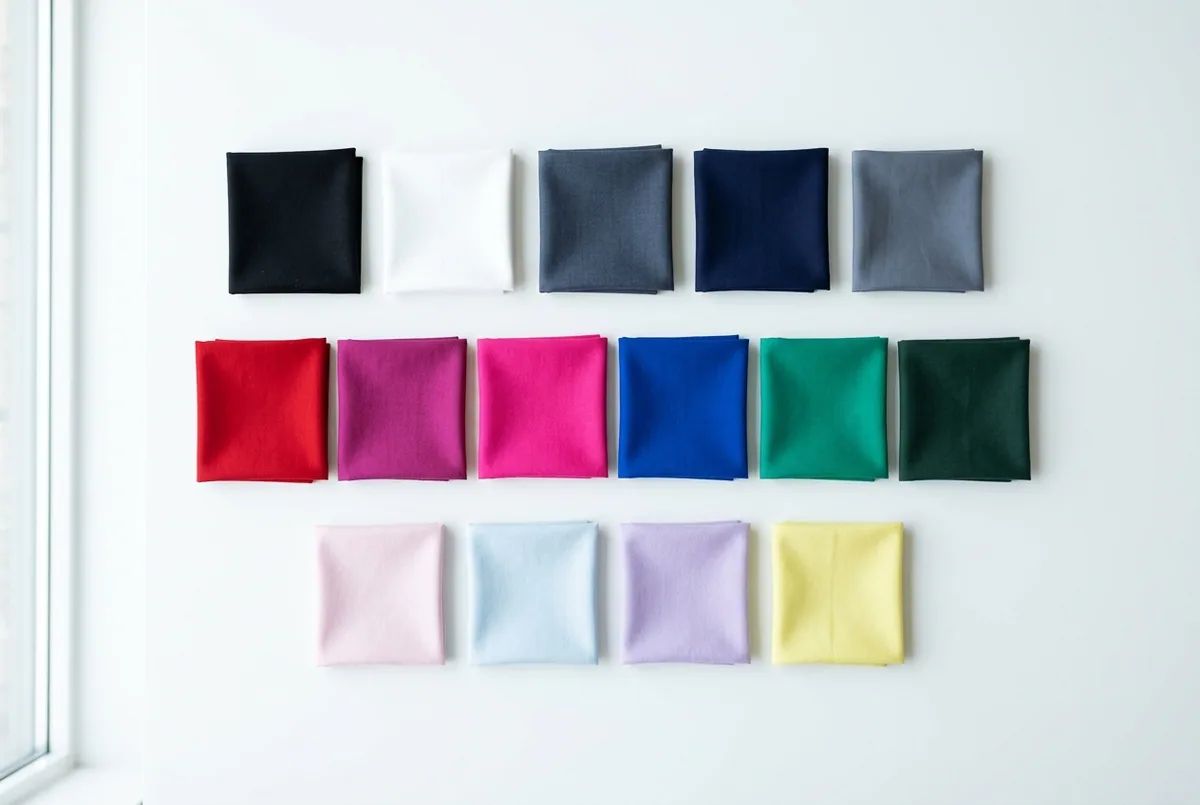
Three rules govern every shade you can wear: it has to sit on a cool base, hold high saturation, and stay clear rather than grayed-down. Warmth muddies you, mutedness flattens you. Everything below passes all three.
Your Neutrals
These carry the weight of your wardrobe: jeans, blazers, knits, coats.
True Black
Your anchor
Pure White
Crisp, never cream
Charcoal
Black, volume down
Navy
The other black
Cool Gray
Quiet, never muddy
You are one of the very few seasons who wears true black and pure white straight off the rack, with no softening needed. Most people look drained in stark black. You look sharpened by it.
Your Cool Brights
This is where True Winter comes alive: jewel tones at full volume.
True Red
Your signature shade
Magenta
Cool and unmissable
Fuchsia
Full saturation
Royal Blue
Sharpens your eyes
Emerald
Jewel-clear, never olive
Pine Green
Deep and cool
Notice there is no orange-red and no teal that tips warm. Every one of these has a blue base underneath the saturation.
Your Icy Pastels
Your light colors are not soft or creamy. They are pastels chilled to the point of looking almost frozen.
Icy Pink
Your softest accent
Icy Blue
Cool and clear
Icy Violet
Frosted, not dusty
Icy Lemon
Cool despite the yellow
The test for any pastel: put it beside a cream swatch like . If your pastel looks cool and clear next to that yellow-tinged cream, it belongs to you. If it starts looking creamy itself, it is too warm.
True Winter Best Colors vs Colors to Avoid
Put your worst enemies and your best friends side by side and the pattern is obvious: every shade that flatters you is cool and clear, and every shade that betrays you is warm, muddy, or both.
Colors That Flatter You
- True red , your loudest, easiest win
- Emerald , clear enough to hold its own
- Royal blue , sharpens light and dark eyes alike
- Icy pink , softness without warmth
- Pure white , the one white that works on you
- Black , frames your face instead of draining it
Colors That Fight You
- Warm beige , adds sallowness, pulls yellow into your skin
- Orange , clashes hard against cool skin
- Mustard , golden and muddying
- Warm coral , far too warm, washes you out
- Olive , muted and warm, a double failure
- Cream , softens the contrast your face depends on
Read the right-hand column and you will see the two ways a color goes wrong for you: it warms, or it mutes. Warmth, meaning the gold in mustard, the yellow in beige, the peach in coral, throws a sallow cast over cool skin and makes you look tired. Mutedness does something quieter but just as damaging: dusty, grayed-down, or earthy tones erase the crisp line between your features that defines the whole season. A shade that commits both sins at once, like olive, is the surest way to disappear. When you are unsure about a color, test it against those two questions before you buy: is it cool, and is it clear?
True Winter Celebrities
The clearest way to train your eye is to study faces that show the pattern at full strength: near-black hair, cool-toned skin, and eyes with a defined edge, all reading in sharp contrast. These names come up again and again in color analysis discussions, and while none of them has been officially draped, the visible combination is easy to check in any red-carpet photo.
Liv Tyler
The textbook version. Cool porcelain skin, near-black hair, and pale blue eyes that create almost violent contrast. Look for her in true red or emerald and the effect is unmistakable.
Megan Fox
Cool skin and dark hair with bright blue eyes. Royal blue sharpens her rather than competing with her.
Krysten Ritter
The same cool skin against dark, often near-black hair, with the crisp light eyes that read winter, not summer. Fuchsia lights her up.
Courteney Cox
Cool skin and dark brown-to-black hair with clear dark eyes. Watch how black-and-white pairings crisp her features instead of draining them.
Lucy Liu
Cool deep skin and true black hair, the high-contrast cool combination in a deeper register. Magenta and pure white both flatter her.
Anne Hathaway
Cool skin, dark brown hair, and dark eyes that hold their edge. She is at her most striking in stark black and jewel-toned red.
Pull up an image of any of them beside a warm-golden blonde and the difference in undertone becomes obvious in seconds.
How to Build a True Winter Wardrobe
Anchor everything on three neutrals: true black , pure white , and navy . These are the backbone your closet is built on. Because you carry stark neutrals better than almost anyone, do not soften them into charcoal-brown or ivory. Buy the black that is actually black.
Then inject saturated color, one strong piece at a time. A true red wool coat, an emerald dress, a royal blue top. Each reads as a statement against your neutrals rather than a background. You need fewer of these than you think, because each one does so much work.
One true black coat
The single highest-leverage piece you can own. Buy real black, not soft charcoal or brown-black.
A crisp white shirt
Pure white, never ivory or off-white. Put it under a black blazer and watch your features snap into focus.
Dark indigo denim
A deep wash with a blue cast. Faded, orange-toned or stonewashed jeans introduce exactly the warmth you are avoiding.
One saturated statement
A true red coat or emerald knit. One loud piece per outfit is plenty, because on you it carries.
Crisp fabrics with sheen
Silk, sateen, smooth wool, polished cotton. Raw linen, heathered tweed and brushed flannel soften the crispness you depend on.
Silver and platinum only
Never gold. Cool-toned gemstones like sapphire, ruby and amethyst finish the look.
Lean into contrast on purpose. A black-and-white pairing that would wash out a Soft Summer sharpens you instead. Hold a silver chain against your collarbone next to a gold one: the silver disappears into your skin, and that is the point.

True Winter Makeup
The same rule that governs your closet governs your makeup bag: cool and clear wins, warm and muddy fails. You carry strong color better than any other season, so the mistake here is almost never “too bold.” It is “too warm.”
Start with foundation. Choose a cool or neutral-cool undertone and avoid anything labeled golden, yellow, or warm. A quick check at the counter: swatch a cool and a warm shade side by side on your jaw in daylight, and the warm one will look like it is sitting orange on top of your skin rather than disappearing into it.
Your Makeup Shades
Blue-based and saturated, on lips and cheeks alike.
True Red
Your signature lip
Deep Berry
The everyday version
Fuchsia
When you want volume
Cool Pink
Blush, never peach
Skip coral, peach, and warm caramel nudes; they drain you and fight your undertone. A bold cool lip is your signature, not a special-occasion risk.
Eyes want cool, crisp shades: charcoal, navy, silver, cool taupe, plum. Leave warm browns and gold to the autumns, because on you they look dull. Since your features hold definition, a sharp liner and a clean shadow suit you far more than a soft smoky blur.
Keep brows cool-toned and defined. If your brow pencil pulls red or golden, it warms your whole face. Match it to your natural ashy dark instead.
True Winter Hair Color
Your hair is meant to stay cool and deep, because it is half of the contrast that defines you. Blue-black, cool espresso, and cool dark brown all sit naturally against your skin. If you are lightening at all, keep it ashy: cool dark brown with a hint of smoke, never anything that warms toward chocolate-caramel.
The single most common mistake True Winters make is warming up dark hair with honey, caramel, copper, or golden balayage. It feels like a safe, flattering choice at the salon, and it is the fastest way to look tired. Warmth in the hair drops a golden cast onto cool skin and muddies the crisp line between your face and your hair, the exact contrast you want to protect. Every gold highlight is a step toward looking washed out.
Highlights, if you want them, should be ashy and cool: a cool light brown lift, not a sun-kissed one. Hold a strand of dyed hair against a gold ring and an ashy hair sample. If your color leans toward the gold, it is fighting you.
Going gray is not a problem for you. It is often a gift. True Winters frequently look striking in cool silver, and fighting it with warm dye works against your coloring. Let it come in cool and bright rather than covering it with a golden brown that will only sallow your skin. Icy platinum can work too, but only if it stays genuinely cool, with no beige or honey undertone anywhere in it.
True Winter vs Bright Winter vs Dark Winter
All three winters share the same clear, cool foundation, which is exactly why they get mixed up. The difference is which direction each one leans away from pure coolness, and that single degree of lean decides whether emerald or icy pink or true black is your strongest color.
True Winter
- Lean: None. Dead center on coolness
- Chroma: Saturated and clear, never neon
- Best colors: True red, royal blue, emerald, pure white
- Key tell: Very bright and very dark both feel slightly like a costume
Bright Winter
- Lean: Toward maximum saturation, tolerates a whisper of warmth
- Chroma: Electric, close to neon
- Best colors: Hot turquoise, electric fuchsia, clear lemon
- Key tell: Contrast even higher than yours
True Winter
- Depth: Moderately deep, balanced
- Undertone: Purely cool, blue-based
- Neutrals: Pure white and true black, no compromise
- Key tell: Pure white beats off-white every time
Dark Winter
- Depth: Deeper and darker throughout
- Undertone: Cool with a neutral edge borrowed from autumn
- Neutrals: Can carry a very deep warm-neutral like espresso
- Key tell: Depth matters more than temperature
If pure cool colors like royal blue and blue-based red make you look sharpest, and both very bright and very dark shades feel slightly off, you are likely True Winter. See the Bright Winter guide for the full comparison, or check the Deep Winter analysis page against the Cool Winter page, which is the True Winter equivalent, to see where you fall.
A quick tell: hold true black next to a warm-toned dark brown. If the black wins cleanly, you are True or Dark Winter, not Bright. Most quizzes disagree on winter subtypes precisely because this lean is subtle, which is why photo-based analysis reads it more reliably than a questionnaire.
Stop Guessing at Your Season
You now know what True Winter looks like and what it wears. The one thing a guide cannot do is tell you whether it is actually you.
That matters more than it sounds. The gap between True Winter and Dark Winter is one step on a single axis, and it changes which reds work, whether espresso is safe, and what your stylist should do at your next appointment. Getting it wrong is how people end up with a closet full of colors that are almost right.
Keep Reading
- Bright Winter Color Palette Guide if the pure-cool colors feel a touch flat and you suspect you belong in the brighter, higher-contrast winter instead.
- True Summer Color Palette Guide is the cool season with softer contrast, worth checking if pure black ever overwhelms you.
- Cool Winter Color Analysis is the 12-season name for your palette, with a deeper breakdown of where True Winter sits.
- What Is My Color Season? gives the full picture of how the 4- and 12-season systems fit together if you are still narrowing down.
- The 12 Color Seasons: Complete Guide shows where True Winter sits on the full wheel.
FAQ – True Winter Color Palette
What is the True Winter color palette?
How do I know if I'm a True Winter or a Cool Summer?
Can True Winters wear black?
What colors should True Winters avoid?
What hair color suits a True Winter?
What lipstick shades work for True Winter?
Is True Winter the same as Cool Winter?
How can I confirm I'm a True Winter?
Discover Your Best Colors
Take a quick quiz and get AI-powered seasonal color analysis with personalized recommendations.