True Autumn Color Palette: The Complete 2026 Guide to Your Best Colors
Your complete True Autumn guide: physical traits, celebrity examples, the full warm color palette with hex codes, plus clothing, makeup and hair advice that actually works.
You put on a camel coat and something clicks. Your skin looks warmer, your eyes look deeper, and people tell you that you look well-rested even though you absolutely are not.
Then you try on a cool grey blazer and the whole effect vanishes.
That is True Autumn — the purest, warmest, richest season in the entire 12-season system.
True Autumn is not muted like Soft Autumn or deep like Dark Autumn. It sits right at the heart of the Autumn family, where warmth is fully expressed and colors are allowed to be rich. Think a forest in mid-October, late-afternoon sun on turning leaves, or a spice market: cinnamon, paprika, saffron, moss.
In this 2026 guide you will get the full picture: the exact physical traits, celebrity examples, a complete palette with hex codes, an honest comparison against the two seasons people most often confuse this one with, and practical advice for clothing, makeup and hair.
What Makes Someone a True Autumn?
True Autumn sits between Soft Autumn and Dark Autumn on the seasonal color wheel, and it is the only one of the three where warmth is the dominant quality rather than a secondary one.
Three qualities define this season:
Your coloring is warm — there is a golden, yellow, or peachy cast to your skin rather than a pink or blue one. It is medium value, meaning you are neither very fair nor very deep. And it is medium-to-high chroma, which is the quality that separates True Autumn from Soft Autumn: your colors are allowed to be rich and fully saturated rather than dusty.
The result is coloring that looks naturally sun-warmed even in winter. Your features have a golden harmony to them, and rich earth tones do not overwhelm you the way they overwhelm cooler or softer seasons.
Physical Traits of True Autumn
Skin
Warm and golden at any depth, from ivory with a peach cast through golden beige, olive, bronze and deep warm brown. You tan rather than burn in most cases, and when you do tan it goes golden or bronze rather than pink. Freckles, when present, are warm and golden brown. Your skin has a visible richness to it that cool colors flatten immediately.
Hair
Golden blonde, strawberry blonde, copper, auburn, chestnut, or warm medium-to-dark brown. The defining feature is the reflection: in sunlight your hair throws off gold, copper or red glints rather than ash or platinum ones. Many True Autumns have natural red tones somewhere in their hair, even if the base reads as brown.
Eyes
Olive green, hazel with gold or amber flecks, warm light brown, or rich medium brown with a golden ring around the pupil. True Autumn eyes tend to have visible warmth and pattern in the iris. Clear icy blue or cool grey eyes are rare in this season and usually point elsewhere.
Famous True Autumn Celebrities
Julia Roberts
Frequently cited as the textbook True Autumn. Warm auburn hair, golden skin and hazel-brown eyes. She is at her most striking in rust, olive and warm cream, and noticeably flatter in cool pastels.
Jenna Coleman
Warm brown hair with copper reflections and golden skin. Her best press looks lean on teal, warm red and forest green, which give her features definition without harshness.
Isla Fisher
Natural red hair and warm, golden-toned skin. Rust, terracotta and warm greens make her colouring look intentional. Cool blue-based pinks visibly compete with her.
Halle Berry
A reminder that True Autumn spans every skin depth. Warm golden-bronze undertone with rich warm brown eyes. Copper, bronze, warm olive and deep gold are consistently her strongest colors.
Jessica Chastain
Fair skin with a warm peach cast and natural red hair. Often mistaken for a cool season because of her fairness, but her undertone is decisively warm. Her best colors are warm ivory, moss and burnt orange.
Eva Mendes
Golden-olive skin and warm dark hair. She looks richest in camel, bronze, deep teal and warm reds rather than the cool jewel tones she is sometimes styled in.
The True Autumn Color Palette 2026
Your palette is rich, grounded and unapologetically warm. Every color in it could be found in a forest between late September and early November.
Key Characteristics
- Warm temperature throughout, with a golden or yellow base in every shade
- Medium depth, neither very light nor very dark
- Medium-to-high saturation — richness is allowed, unlike Soft Autumn
- Earthy rather than icy, even in the brighter shades
Core Colors You’ll Love in 2026
Oranges and Rusts: Rust, burnt orange, terracotta, pumpkin, warm apricot
Browns and Neutrals: Camel, caramel, chocolate, coffee, warm beige, cream, khaki
Greens: Forest green, moss, olive, warm sage, bronze-green
Yellows and Golds: Mustard, amber, honey, antique gold, marigold
Blues and Teals: Deep teal, petrol, warm turquoise — your best “cool” colors, because they still carry a yellow base
Reds: Brick red, tomato, warm burgundy, paprika
Your Color Swatches
Rust
Terracotta
Camel
Caramel
Chocolate
Warm Cream
Forest Green
Moss
Olive
Mustard
Deep Teal
Brick Red
Colors to Avoid
Pure black, stark white, icy pastels, fuchsia, cool blue-pink, lavender, cool grey, navy with a blue base, and anything described as “cool-toned” or “jewel-bright.”
Visual Palette Reference Table
| Category | Best Shades | Avoid |
|---|---|---|
| Neutrals | Camel, chocolate, warm cream, khaki | Black, stark white, cool grey |
| Tops and Dresses | Rust, forest green, mustard, deep teal | Fuchsia, icy pink, lavender |
| Bottoms | Chocolate brown, olive, warm charcoal | Blue-based navy, black |
| Lip Colors | Brick, terracotta, warm nude, spiced berry | Blue-red, cool pink, mauve |
| Eye Shadows | Bronze, copper, warm olive, golden brown | Silver shimmer, cool taupe, icy white |
True Autumn vs. Similar Seasons
Two comparisons matter here, and they fail in opposite directions. Soft Autumn confusion is about chroma. Dark Autumn confusion is about value. Temperature is not in question for either — all three are warm.
True Autumn vs. Soft Autumn
True Autumn
- Chroma: Rich, fully saturated
- Oranges: Real rust and pumpkin
- Contrast: Medium to medium-high
- Key tell: Rich colors energise you
Soft Autumn
- Chroma: Muted, grayed veil over everything
- Oranges: Dusty terracotta, faded apricot
- Contrast: Low, blended
- Key tell: Rich colors overwhelm you
The fastest test: put on a saturated rust or pumpkin orange in daylight. If your features look sharper and your skin looks lit from within, you are True Autumn. If the color seems to arrive in the room before you do and your face recedes behind it, you are Soft Autumn.
True Autumn vs. Dark Autumn
True Autumn
- Value: Medium depth
- Best neutral: Camel, caramel
- Signature: Mustard, rust, moss
- Key tell: Mid-tones look natural
Dark Autumn
- Value: Deep and dramatic
- Best neutral: Espresso, dark olive
- Signature: Burgundy, deep forest, bronze
- Key tell: Mid-tones look slightly weak
If you want the full breakdown of the deeper end of the Autumn family, our Dark Autumn palette guide covers it in detail, including where it borders Dark Winter.
How to Wear True Autumn Colors Every Day
Clothing and Wardrobe Capsule
Build around these hero pieces. Each one works with every other one, which is the entire point of dressing inside a palette.
Camel Wool Coat
The single best investment in your palette. Works over every other color you own and reads as expensive regardless of what it cost.
Rust Knit Sweater
Your most flattering color worn closest to your face. If you own one statement knit, make it this one.
Chocolate Brown Trousers
Your black-jeans replacement. Grounds an outfit exactly the way black does, without the drain.
Deep Teal Midi Dress
Your best photographic color. Teal reads as a “cool” color but carries enough yellow to stay firmly in your palette.
Warm Cream Silk Blouse
Never optical white. Cream and warm ivory are your version of a white shirt, and the difference near your face is dramatic.
Olive Utility Jacket
Warm olive is a genuine neutral for you. It layers over rust, cream and mustard without any thought required.
Fabrics that elevate you: Suede, corduroy, wool, tweed, raw silk, leather and heavy linen. Texture and warmth go together, and matte, tactile fabrics reinforce the richness of your coloring.
Patterns: Animal print (genuinely a neutral for you), paisley, autumn florals, plaid in warm tones, batik and tortoiseshell.
Makeup for True Autumn
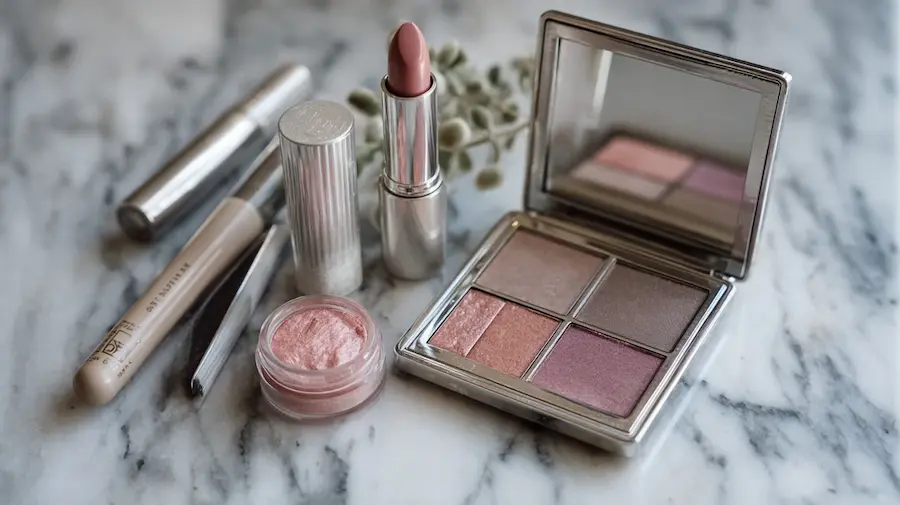
- Foundation and Concealer: Warm or golden undertone. If your foundation looks slightly pink or ashy in daylight, it is the wrong base
- Blush: Warm peach, apricot, or terracotta rather than cool pink
- Lips: Brick red, terracotta, spiced cinnamon, warm nude, or a golden-based berry
- Eyes: Bronze, copper, warm olive, golden brown, deep forest. Gold shimmer, never silver
- Mascara and Liner: Brown or warm dark brown rather than pure black, which is often too stark against warm features
- Highlighter: Champagne or warm gold, never a cool pearlescent white
Hair Color
Warm is the rule: golden blonde, honey, copper, auburn, chestnut and warm chocolate all work beautifully. Balayage in caramel or honey tones is essentially designed for you.
Avoid ash blonde, platinum, cool “mushroom brown,” and blue-black. These are among the most popular salon requests of the last few years and they are the fastest way for a True Autumn to look drained.
How to Confirm You’re True Autumn
If gold clearly beats silver on you, rich earth tones make you look healthier, and black has always felt slightly wrong near your face, the evidence is pointing one direction.
The remaining question is usually not whether you are Autumn but which Autumn — and that is the part self-assessment gets wrong most often, because chroma and value are much harder to judge in a mirror than temperature is.
An AI photo analysis measures undertone, value, chroma and contrast from your actual pixel data rather than from how you describe yourself, which removes the self-reporting problem that makes online quizzes so inconsistent.
Related Reading
- What Is My Color Season? The Ultimate 2026 Guide — start here if you are not yet sure you are an Autumn
- Dark Autumn Color Palette Guide — the deeper, more dramatic neighbour
- Soft Summer Color Palette Guide — the cool-side mirror of Soft Autumn
- Warm Autumn Color Analysis — the full palette, physical traits and FAQ in our dedicated Warm (True) Autumn guide
- The 12 Color Seasons: Complete Guide — see where True Autumn sits on the full wheel
FAQ – True Autumn Color Palette
Can True Autumn wear black?
What is the difference between True Autumn and Soft Autumn?
What is the difference between True Autumn and Dark Autumn?
What metals and jewelry look best for True Autumn?
Does True Autumn work for deeper skin tones?
I have red hair. Am I automatically True Autumn?
Where can I shop True Autumn colors?
Discover Your Best Colors
Take a quick quiz and get AI-powered seasonal color analysis with personalized recommendations.