
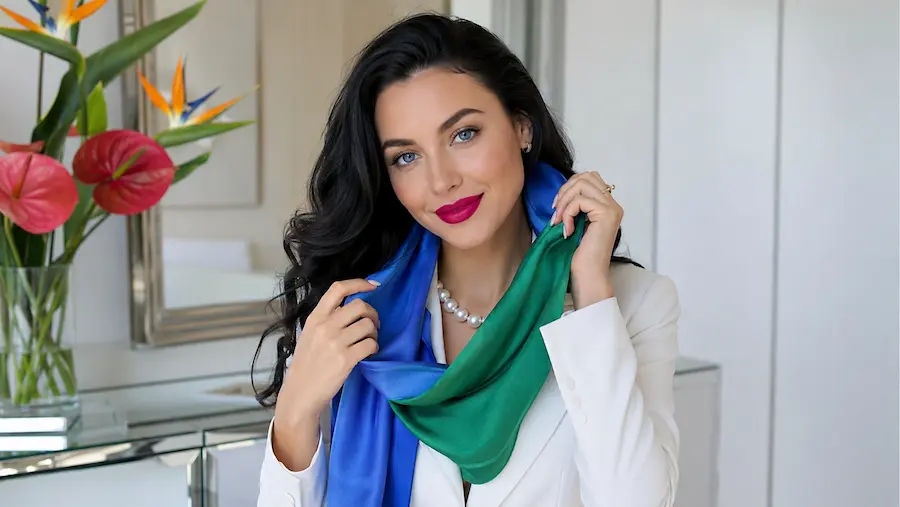
Bright Winter Color Palette: The Complete 2026 Guide to Your Best Colors
Your complete Bright Winter guide: physical traits, celebrity examples, the full high-contrast color palette with hex codes, plus clothing, makeup and hair advice that works.
You have been told to “tone it down” your entire life. Soften the lipstick. Try a more neutral palette. Maybe something dusty.
And every time you follow that advice, you look slightly ill.
Then you put on a fuchsia dress or a cobalt coat and suddenly everything works — your eyes sharpen, your skin clears, and the outfit looks like it was made for you.
That is Bright Winter, and the standard advice was never written for you.
Bright Winter is the most vivid season in the entire 12-season system. It sits at the boundary where Winter’s coolness meets Spring’s clarity, producing a palette of high-contrast, high-saturation color that would overwhelm almost anyone else. Think a jewel case under a spotlight, or a tropical sea against white sand.
In this 2026 guide: physical traits, celebrity examples, the full palette with hex codes, honest comparisons against the two seasons Bright Winters are most often mistaken for, and practical clothing, makeup and hair advice.
What Makes Someone a Bright Winter?
Bright Winter sits between True Winter and Bright Spring on the seasonal color wheel. It is the season where brightness, not coolness, is the dominant quality.
That distinction matters more than it sounds. In True Winter, coolness leads. In Bright Winter, chroma leads and coolness follows — which is why Bright Winter can borrow a few colors that look almost warm, provided they stay vivid enough.
Three qualities define the season:
Your coloring is high chroma — clear, saturated and vivid, with nothing dusty or muted about it. It is cool, with a blue or pink base rather than a golden one. And it is high contrast, meaning there is a genuinely dramatic gap between your hair, skin and eyes.
That last quality is the giveaway. Bright Winters usually have dark hair against noticeably lighter skin, or very light hair against deep skin, plus eyes that read as clear and striking rather than blended.
Physical Traits of Bright Winter

Skin
Cool and clear at any depth, from porcelain through cool olive to deep cool brown. The defining quality is clarity rather than lightness: your skin looks fresh and even, with visible contrast against your hair. Cool undertones show as pink, blue or neutral-cool. Bright Winter skin rarely looks golden, and warm colors near the face tend to produce a visible sallow or greenish cast.
Hair
Usually dark: cool dark brown, near-black, or true black, with cool reflections rather than gold or copper. Some Bright Winters have bright, clear cool blonde against deeper skin. The important part is contrast against your skin, not the hair color in isolation. Ashy mousy tones and warm honey shades are both unusual in this season.
Eyes
Clear and striking, with a sharply defined iris. Bright blue, clear green, cool hazel, or deep brown with a visible dark limbal ring. The whites of the eyes tend to be notably clear, which adds to the overall crisp effect. Blended, hazy or soft-edged irises point toward a Summer season instead.
Famous Bright Winter Celebrities
Anne Hathaway
Often cited as the reference Bright Winter. Dark hair against fair, cool skin with clear brown eyes. Her strongest red carpet looks are consistently in fuchsia, true red, cobalt and pure white.
Courteney Cox
High contrast between near-black hair and cool fair skin. Bright, clear colors give her features definition, while the muted neutrals she is often styled in visibly under-serve her.
Lucy Liu
Cool undertone with dark hair and clear, high-contrast features. She is at her most striking in saturated jewel tones and true white rather than earth tones.
Krysten Ritter
Very fair cool skin against dark hair — about as high-contrast as it gets. Bright cool colors and stark black-and-white combinations are her natural territory.
Lupita Nyong’o
Proof that Bright Winter spans every skin depth. Deep cool complexion with clear, high-contrast features. Her most celebrated looks are in vivid saturated color — fuchsia, cobalt, emerald — rather than muted neutrals.
Liv Tyler
Cool fair skin, dark hair, and unusually clear blue eyes. The clarity of her coloring is the giveaway: she suits crisp, saturated color far better than anything dusty.
The Bright Winter Color Palette 2026
Your palette is vivid, cool and unapologetically high-contrast. Every color in it is fully saturated, and nothing in it is dusty.
Key Characteristics
- High chroma throughout — clear and saturated, never muted
- Cool temperature with a blue or pink base
- High contrast, including true black and true white
- Icy pales rather than soft pastels when you want something light
Core Colors You’ll Love in 2026
Pinks and Reds: Fuchsia, hot pink, true red, cherry, magenta, icy pink
Blues: Cobalt, royal blue, true navy, electric blue, icy blue
Greens: True emerald, bright jade, hot turquoise, clear pine
Purples: Bright violet, true purple, icy lavender
Neutrals: True black, pure white, charcoal, cool grey
Accents: Bright chartreuse-lime, clear lemon, ice blue
Your Color Swatches
Fuchsia
Magenta
True Red
Bright Violet
Cobalt
True Navy
Hot Turquoise
True Emerald
Bright Lime
Icy Blue
Pure White
True Black
Colors to Avoid
Dusty rose, sage, olive, camel, rust, mustard, terracotta, warm beige, oat, heather grey, and every muted or “earthy” neutral. Warm browns are particularly difficult.
Visual Palette Reference Table
| Category | Best Shades | Avoid |
|---|---|---|
| Neutrals | True black, pure white, charcoal, true navy | Camel, beige, oat, greige, warm brown |
| Tops and Dresses | Fuchsia, cobalt, true emerald, true red | Dusty rose, sage, mustard, terracotta |
| Bottoms | True black, charcoal, true navy | Khaki, warm brown, olive |
| Lip Colors | True red, fuchsia, cherry, clear berry | Brick, coral, warm nude, dusty mauve |
| Eye Shadows | Charcoal, cool navy, icy white, clear jewel tones | Bronze, copper, warm taupe, muted brown |
Bright Winter vs. Similar Seasons
Two comparisons cover almost all Bright Winter confusion. The Bright Spring question is about temperature. The True Winter question is about degree of brightness.
Bright Winter vs. Bright Spring
This is the classic sister-season flip: identical brightness, opposite temperature. It is one of the four hardest calls in the whole system.
Bright Winter
- Undertone: Cool, blue base
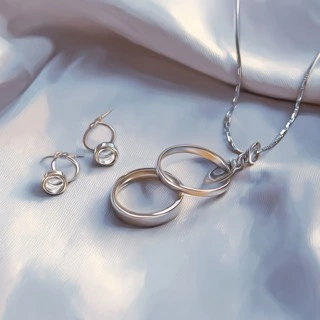
- Best metal: Silver, platinum
- Signature pink: Fuchsia, magenta
- Best white: Pure optical white
Bright Spring
- Undertone: Warm, yellow base
- Best metal: Gold
- Signature pink: Coral, warm watermelon
- Best white: Warm ivory
The fastest test: hold a true fuchsia against a bright coral. Both are vivid, so brightness is not the variable — only temperature is. The one that makes your skin look clear and your eyes look sharp is your side of the line. If coral makes you look flushed or slightly yellow, you are Bright Winter.
Bright Winter vs. True Winter
Bright Winter
- Chroma: Highest — almost electric
- Leans toward: Spring
- Signature: Hot turquoise, bright lime
- Key tell: Vivid never looks costumey
True Winter
- Chroma: High but purer and icier
- Leans toward: Nothing — it is the cool centre
- Signature: Pine green, icy pink, true blue
- Key tell: Icy shades outperform electric ones
How to Wear Bright Winter Colors Every Day
Clothing and Wardrobe Capsule
Cobalt Statement Coat
Your best investment piece. Saturated blue outerwear does more for Bright Winter coloring than any neutral coat ever will.
Fuchsia Knit or Blouse
The color almost nobody else can wear, worn right where it counts. If you own one statement top, make it this.
True Black Trousers
Genuinely your neutral, unlike most seasons. Pure black, not washed or faded charcoal-black.
True Red Dress
Blue-based, not orange-based. Your most photogenic color and the one that reads as effortless confidence.
Pure White Shirt
Optical white, never cream or ivory. The crisp white shirt is genuinely your garment, and the difference from off-white is obvious on you.
True Emerald Accessory
A saturated green scarf or bag brings your palette into an otherwise black-and-white outfit without any effort.
Fabrics that elevate you: Crisp cotton, silk, satin, high-shine leather, structured wool and anything with a clean finish. Unlike softer seasons, you can carry sheen — polished, reflective surfaces reinforce your natural clarity rather than competing with it.
Patterns: High-contrast graphics, bold geometrics, black-and-white prints, colour-blocking and large-scale florals in saturated tones. Small dusty florals and blended watercolour prints will look muddy on you.
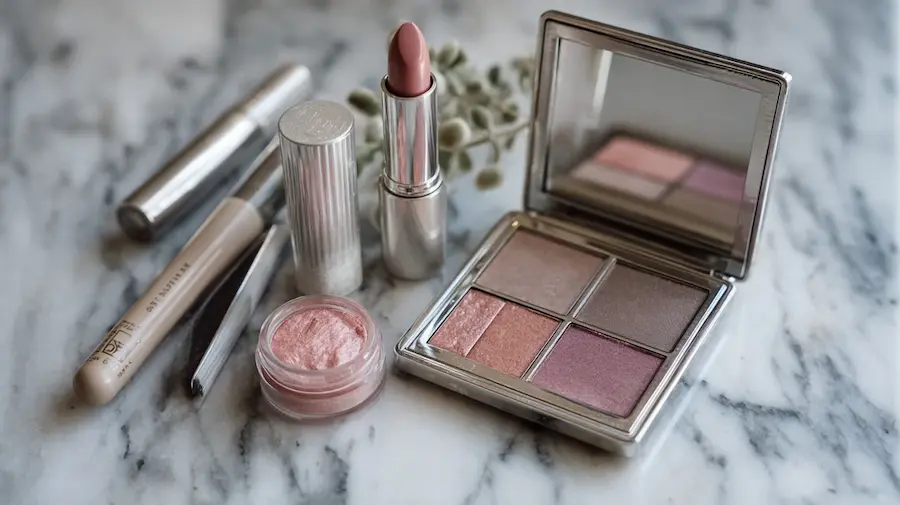
Makeup for Bright Winter
- Foundation and Concealer: Cool or neutral-cool. Golden and “warm beige” shades will look muddy against your undertone
- Blush: Cool pink, bright rose, or clear berry. You can go stronger than most seasons without looking overdone
- Lips: This is where you shine. True red, fuchsia, cherry, clear berry, bright plum. Bold lipstick genuinely suits you, and nude lips often make you look washed out
- Eyes: Charcoal, cool navy, icy white, and clear jewel tones. Silver shimmer, never bronze or gold
- Mascara and Liner: Pure black. One of the few seasons where true black liner is exactly right rather than too harsh
- Highlighter: Icy, cool-toned or silver-white, never champagne or gold
Hair Color
Cool and clear: true black, cool dark brown, cool espresso, and at the lighter end a clear cool blonde with real contrast against your skin. Whatever you choose, keep the tone cool and the result crisp.
Avoid golden blonde, honey, caramel, copper and auburn, along with muted “mushroom” and mousy ash-brown shades, which flatten the contrast that defines your season.
How to Confirm You’re Bright Winter
If you can wear fuchsia, if true black and pure white both work on you, and if you have spent years being told to soften your look while quietly knowing that bright colors suit you better — the evidence points one way.
The remaining question is usually Bright Winter versus Bright Spring, and that comes down to a single variable: temperature. It is genuinely hard to judge on yourself, because brightness is so visually dominant that it masks undertone.
An AI photo analysis measures undertone, value, chroma and contrast directly from your pixel data instead of relying on self-description, which is where the warm/cool call on bright seasons usually goes wrong.
Related Reading
- What Is My Color Season? The Ultimate 2026 Guide — start here if you are not yet sure you are a Winter
- True Summer Color Palette Guide — the cool season most often confused with Winter on dark-haired, fair-skinned people
- Dark Autumn Color Palette Guide — the warm mirror of the deep end of Winter
- Bright Winter Color Analysis — the full palette, physical traits and FAQ in our dedicated Bright Winter guide
- The 12 Color Seasons: Complete Guide — see where Bright Winter sits on the full wheel
FAQ – Bright Winter Color Palette
Can Bright Winter wear black?
What is the difference between Bright Winter and Bright Spring?
What is the difference between Bright Winter and True Winter?
What metals and jewelry look best for Bright Winter?
Does Bright Winter work for deeper skin tones?
Why do pastels look so bad on me?
Where can I shop Bright Winter colors?
Discover Your Best Colors
Take a quick quiz and get AI-powered seasonal color analysis with personalized recommendations.